Category Archives: Mobile Marketing Magazine

Mahala Social Marketplace in beta

Mahala, a social network monetisation platform, is set to launch this month, enabling anyone to buy and sell products on their Facebook wall and other platforms via a secure QR code (S-QR).

The Mahala Mobile Shopper app is in beta and will be available soon on iOS, Android and BlackBerry World. Buyers simply link it with their PayPal account and scan any QR code from the company. Sellers can create an S-QR for each product or service, upload it via the Mahala portal and then share it.

The company believes this will help independent musicians, film makers and artisans to sell their wares without the need for an eCommerce site. The codes can also be placed in print or on other surfaces, like t-shirts.

Asked if this is a first, a company spokesperson, said: “It is the first. Security has always been the issue. It is not as easy as it looks. The security and convenience behind Mahala’s solution are key.”

The platform was born out of an initiative to bank the unbanked in South Africa. Sonny Fisher, CEO of Skynet Technology Group, said: “This marks the culmination of four years of hard work by our teams of global experts. By securely monetising the social networks, we have staked our claim in the payment space. This is the first of many revolutionary payment solutions that we are rolling out globally during the course of 2013.”

Written for Mobile Marketing Magazine and published here: http://www.mobilemarketingmagazine.com/content/mahala-social-marketplace-beta

Fab’s Mobile Users Spend 20 Per Cent More

Fab, the online design product marketplace, has found that its mobile users purchase 20 per cent more items per order than PC customers, with 30 per cent of total sales now coming from its mobile apps. 

This figure, the company says, sometimes reaches above 50 per cent. People who use Fab’s mobile apps convert to purchasers more than twice as often as web-only users and they purchase twice as often, the retailer added.

“Success on mobile is now a barometer of a company’s success,’” said CEO Jason Goldberg. “It is not an understatement to say that Fab is a breakout mobile retailer.”

Fab has introduced updates to its iOS and Android apps, including improved search, browsing and filtering to enable mobile searchers to find items by product type, colour, price, popularity and availability.

The company, which prides itself on the sociability of its user-base, has also introduced Fab profiles so fans can bookmark and display all of the items favourited and purchased. Social has been a key part of the network’s growing success, with 50 per cent of its members coming from social.

The retailer, which launched in 2011, currently has 10m users who can browse up to 15,000 products from designers at any one time.

Written for Mobile Marketing Magazine and published here: http://www.mobilemarketingmagazine.com/content/mobile-users-spend-20-cent-more-finds-fab-design-marketplace

Telefónica Commits to EU Tech Job Pledge

Technology companies, including ARM, Cisco and Telefónica, have joined a ‘Grand Coalition’ announced by the EU commissioner for technology at Davos in order to boost digital skills, innovation and entrepreneurship in the region.

Speaking at the World Economic Forum, Neelie Kroes said that Europe would have 1m new tech jobs by 2016 and 2m by 2020, with up to a fifth of these in the UK. The initiative should equip Europeans with technological skills and knowledge to fill these roles.

Telefónica’s COO, José María Álvarez-Pallete, pledged to give support to 1,000 start-ups globally by 2015 through its Wayra Academy programmes, along with commissioning an attitudes survey of Millennial adults in the 27 member states and launching a new tech event in London, Campus Party Europe, to take place in September. Telefónica also aims to have built an online community of 300,000 young entrepreneurial Europeans, to teach digital literacy to 50,000 students in its Think Big School and get 5,000 young people and graduates into tech roles via its Talentum programme.

Skills shortages

“The transition to a knowledge-based and innovation-driven economy is accelerating, but skills shortages and gaps are negatively impacting growth, competitiveness, innovation and employment in Europe,” said Álvarez-Pallete, speaking at the World Economic Forum. “We believe that commissioner Neelie Kroes’ Grand Coalition for Digital Jobs is a very helpful catalyst to help European recovery. The private sector has a critical role to play and we will be working actively to build a real momentum across Europe”.

Telefónica has already been working to address existing skills gaps and encourage entrepreneurship, launching five Wayra start-up academies in Europe in the last 12 months. The company, which owns the UK’s O2 network and serves 100m customers in the EU, says it has invested in a new start-up every three days and created nearly three new jobs every day since Warya opened its doors. It has also trained 4,180 young people to start their own social projects and taught 1,000 young people about digital skills.

Written for Mobile Marketing Magazine and published here: http://www.mobilemarketingmagazine.com/content/telefonica-joins-eus-tech-job-pledge-1000-start-ups-goal

Mobile a Big Success in Record Year for BBC iPlayer

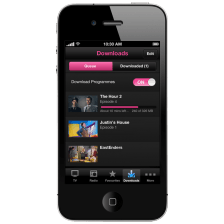
Mobile now makes up a quarter of all iPlayer traffic after a 177 per cent increase in smartphone and tablet usage during 2012. For the first time in its history, PC traffic made up less than half of all visits, 47 per cent, in December. Along with mobile, connected devices, including games consoles and smart TVs, make up the remainder.

The iPlayer app has now been downloaded 14m times, including 300,000 on Christmas Day alone. Mobile downloads of BBC programmes have proved a massive hit, with 10.8m downloaded to iOS devices since the service launched in September. They have quickly taken a 6 per cent share of viewing on mobiles and tablets. The majority of viewers download programmes at 10pm and watch them on the way to and from work at 7.30am and 5.30pm, the BBC has found.

Record usage

2.32bn TV and radio programme requests and 36.5bn minutes were consumed across all platforms during 2012. This is 34 per cent more time spent watching iPlayer than ever before. December continued to be the most popular month, with a record 217m requests for TV and radio programmes, a 23 per cent increase on 2011.

2013 has had a strong start, with 6,732m requests for TV programmes on January 1 alone, the most ever seen in 24 hours. The Olympic Opening Ceremony topped iPlayer viewing, followed by Top Gear and Sherlock.

Written for Mobile Marketing Magazine and published here: http://www.mobilemarketingmagazine.com/content/mobile-big-success-record-year-bbc-iplayer

FTC Tells Google: "Don’t be Evil"

Written for and first published here: http://mobilemarketingmagazine.com/content/ftc-tells-google-stop-being-evil

Google has agreed to change some of its business practices following a large-scale investigation by the Federal Trade Commission (FTC) into the company’s operations.

The FTC criticised Google for breaches of licensing agreements on patents essential to the development of the industry. The agreement could spell the end of the wave of costly class actions over patent infringments between technology companies.

Google has also promised to stop using content from other companies’ websites for use on its own vertical offerings, and will also give advertisers more flexibility to manage ad campaigns on Google AdWords, along with other rival ad platforms simultaneously. While Google was investigated for manipulating search algorithms to favour its own vertical websites, the FTC concluded that this ‘could be plausibly justified as innovations that improved Google’s product and the experience of its users’.

Standardised patent ruling

Motorola, bought by Google in June, is accused of reneging on commitments to give competitors fair, reasonable and non-discriminatory access to patents needed to develop products including iPhones, iPads and Xboxes. Google continued this, seeking injunctions against companies that wanted to license these patents, which ‘constitute unfair methods of competition, as well as unfair acts and practices’, the Commission said.

Should the terms be accepted following a period of public comment, this could set a precedent for similar disputes across other industries where companies amass patents for ‘for purely defensive purposes’. The judgement should prevent firms from performing a ‘patent ambush’, where the cost of royalties incurred by businesses can be passed on to consumers, or prevent products from being developed at all.

“The changes Google has agreed to make will ensure that consumers continue to reap the benefits of competition in the online marketplace and in the market for innovative wireless devices they enjoy,” said FTC chairman, Jon Leibowitz. “This was an incredibly thorough and careful investigation by the Commission, and the outcome is a strong and enforceable set of agreements.”

Some members of the Commission criticised the FTC’s use of Section 5 of the Federal Trade Commission Act as an abuse of the its authority and claimed that this judgement is in conflict with a previous ruling concerning Apple and Motorola.

Facebook Will Monetise Instagram – But How?

Written for and first published here: http://mobilemarketingmagazine.com/content/facebook-will-monestise-instagram-how

For the early-adopting hipsters that popularised the photo-sharing app Instagram, its buyout by Facebook was welcomed like their mum turning up wearing skinny jeans. It was inevitable that change was on the way and Facebook has now begun testing the service as its route to making money on mobile. Just as they find out their mum has started hanging out in East London.

Facebook has so far proved that you can have 1bn users and not be making enough money. And as a publicly listed company, it really needs to start making something back for its shareholders, particularly on the costly buyout of the Instagram app company. Of course, as Instagram’s co-founder, Kevin Systrom, said in a clarifying blog after the news spread, and suggestion of a boycott gathered pace, the service was created to become a business.

While he has denied that the company will sell users’ photos, social advertising in-app, with branded accounts and the potential for your preferences to be considered as endorsements are well on the way. While Instagram says on its website that it is looking at ‘innovative advertising’, this sounds very similar to what Facebook is doing, and is struggling to monetise.

But if I like something on Facebook, or follow an account on Instagram, does that mean that I advertise it? Questions have already been raised about whether people have even ‘liked’ things that appear on their Facebook feeds, and some have even claimed that dead people are managing to endorse brands from beyond the grave.

“Our main goal is to avoid things like advertising banners you see in other apps that would hurt the Instagram user experience. Instead, we want to create meaningful ways to help you discover new and interesting accounts and content while building a self-sustaining business at the same time,” Systrom said.

So what does the future hold for Instagram – apart from the inevitable need to generate some cash? As with many changes that Facebook has introduced, while there is the usual push back and the most determined leave the service, many people accept them as the price of free access. If a service is free, you are the product, so the saying goes. Users have to ask themselves what they are comfortable with sharing while accepting less control. They have until 12 January to remove their profiles before the experiments with brands and advertising start to happen.

Instagram could opt for a paid-for, ad free premium service, although this could reduce the appeal of its inventory to brands by reducing the number of affluent, desirable advertisees. Microsoft computer science researcher, Jaron Lanier, told Newsnight: “The internet has to be about more than advertising or it’s a path to nowhere.” Alluding to a looming advertising bubble, he said that if we wanted to build the ‘information economy’, people have to be able to share money and buy things on Facebook. But that means they have to trust it.

The question has started to be asked – can and will people start charging for their data? Or could they be given more opportunity to say ‘yes, I want advertising about cars, holidays and business solutions, please do not send me things about…’? For more on what these developments could look like, see i-allow.

Could this very 21st century problem end up with one social network bringing down another? The #boycottinstagram campaign on Twitter sure hopes so. Or is this all just a Twitter storm in a tea cup?
Meanwhile, Facebook’s founder Mark Zuckerberg has announced the donation of $500m worth of Facebook stock to charity…

Women in Wireless London – Building your International Career

Written for and first published here: http://mobilemarketingmagazine.com/content/women-wireless-london-building-your-international-career

 Women in Wireless London welcomed two internationally successful women in mobile to talk at their event last night, ‘Building your International Career’.

Both Cynthia Gordon, CCO at Qatar-based network Qtel, and Marianne Roling, MD of Mobile for Microsoft in Central and Eastern Europe have had impressive 20 year careers that have seen them living all over the world.
Cynthia Gordon 
Cynthia GordonCynthia’s roles have taken her from the -35 temperatures she experienced when working for MTS, the largest mobile operator in Russia, to the +50 heat she now works in at the Qatari firm that serves 90m subscribers and generates $10bn. “One tip – it’s all about clothing” she said.

“Europe and the US are quite similar, there are commonalities. Tajikistan, Uzbekistan, Rajasthan are truly different – the culture, the environment. If I can excite you about anything – grasp those opportunities to experience something that is totally different.”

GSMA MWomen Programme

She said that an international career gives you a fantastic opportunity to learn but also fantastic opportunities to help other women in the customer base or company you work for – women are often hugely underrepresented in emerging market companies.

She highlighted the MWomen Programme of the GSMA. “In Iraq – women are killed for having a mobile phone. Men think they will have affairs or it will take them away from their families.” The GSMA created special TV ads to address the cultural barriers and have increased the female user-base from 20 to 30 per cent. “How many women have the opportunity to use mobile phones is a big issue in emerging markets.”

From the Berlin Wall to real-time global translation
Marianne Roling 
Marianne RolingAfter the fall of the Berlin Wall, Marianne had the opportunity to work on a Hungarian project funded by the World Bank to build telecoms infrastructure, where just 8 per cent of the homes had a telephone line.

She has seen the internet boom and bust, the development of the mobile industry and now the smartphone and tablet revolution. Micosoft recently performed a real-time translation between the US and China as if the American speaker was fluent in Chinese.”This is the most viibrant, amazing industry ever,” she said.

Work/life balance

She separated her success into having great networks and role models, identifying sponsors, mentors and coaches, as well as getting a work/life balance. She moved five times in five years while she was working for Lucent in South America, completely starting form ground zero every time.

“Now I don’t travel at the weekends and do lots of conference calls early in the morning. You have to create the rhythm with your family.” But Cynthia said she believes you can’t have it all. “My husband gave up his career even though when we met we were level.”

Her key advice to get that international mobile career you crave: “Numbers numbers numbers. Go into the detail – never skim over the topic, seek to understand it better than anybody else. Have confidence in what you can do and achieve, get on that plane, you can do it.”