Author Archives: kirstystyles1

Microsoft Promises Cheaper Windows 8 Tabs in Q3 Earnings Call

Microsoft has announced revenue of $20.49bn for its third quarter ended 31 March, an increase of 18 per cent year-on-year.

The Entertainment and Devices division, which includes Windows Phone devices and with games console, posted revenue of $2.53bn, an increase of 56 per cent from a year earlier. The Windows division, including Surface tablets and PCs, saw a year-on-year revenue increase of 23 per cent to $5.7bn.

Windows Phone ‘momentum’

Although Windows Phone is trailing far behind Android and iOS, Steve Ballmer, CEO, said on an earnings call that he is happy with its performance so far: “Momentum with Windows Phone continues to build. The device is now available in a broad range of price points. We’re receiving great reviews and carrier support continues to grow.

“We now have over 10 per cent share in several countries, but realise there is still a lot of work ahead to break through in some key markets. The growing awareness of Windows Phone has sustained innovation from our hardware partners, and we feel well-positioned to continue our momentum.”

The company’s CFO, Peter Klein, who is stepping down at the end of the financial year, said he expects the final quarter revenue growth in the Enterainment and Devices division to be in the mid-teens. In the Windows division, he said that manufacturer revenues will be hit by declining sales of PCs but it will be working to increase its tablet share.

Low-end Windows 8 tablets
Asked how Microsoft intends to increase its share of the tablet market, Klein  said that Microsoft has already increased distribution on Surface to 22 countries and 70 retailers, “and we’ll continue to look to expand that. Not just expanding, but improving the experience. And that’s true not just for Surface, but for broadly Windows 8 devices. So we’ll be investing against that for both Surface and a broader array of Windows 8 devices at multiple price points, including lower price points going forward.”

“The biggest thing we’re doing is helping OEMs develop new and improved user experiences across the board, across size, across price point and deliver a really compelling Windows 8 experience,” Klein said. “And it’s not just the devices. It’s chips, it’s the apps, it’s the buying experience, it’s the user interface. So we’re really focused on all five or six of those dimensions going forward.

“As we look towards the future, we have a solid foundation of products and services in market, and our leadership team is collectively focused on advancing every one of our businesses. You can expect to hear more about the specific actions we are taking over the next few months.”

Written for and first published here: http://www.mobilemarketingmagazine.com/content/microsoft-promises-windows-8-tablets-lower-price-points

Who was Boney M Anyway? Or why it’s no surprise you don’t know who Margaret Thatcher is (was)


At a pub quiz a few weeks ago our team had an average age of 30(ish), with only my boss (yes I spend my spare time at quizzes with my boss) over the age of 50.

We decided that we’d try to double our points on the noughties round – steering well clear of the 70s ‘mum and dad school reunion round’ – as it was the decade that most of us remembered most clearly. Yes – we could have gone for the 90s… Perhaps if we were cooler, we would have.

So we powered through Vampire Weekend and Kelly Clarkson and bumped ourselves up from second-til-last to fourth. Hey, we didn’t win, but we were nearly on the podium. Think about how those guys in second place felt, knowing how close they were to stealing victory.

Anyway. During That 70s Round, my boss exclaimed: “How do you not know who Boney M are?!?” “Err… I recognise the name but maybe because I wasn’t alive in the 70s? And nobody seems to mention them in passing..? And I don’t listen to Smooth and 6Music doesn’t seem to remember them either..?

Wikipedia, knower of most things, knows that “the group was formed in 1975 and achieved popularity during the disco era of the late 1970s. The group has sold more than 150m albums and singles worldwide with most sales in the UK and Germany.” So Boney M is plural. Who knew?

A pretty huge chunk of history has passed me by but hey, perhaps I’ll go back in time and ask my mum to mention everything she thinks I might have missed. Anyway, they don’t teach pop music at school – although they do at this university…

“Many have taken to Twitter today to pour scorn on many of its younger users who didn’t (or lolz pretended they didn’t) know who Margaret Thatcher was.”

So just as my boss was surprised about this, many have taken to Twitter today to pour scorn on many of its younger users who didn’t (or lolz pretended they didn’t) know who Margaret Thatcher was. She became head of the Conservative Party (or the Tories, as they are now more popularly known) in 1975 and was succeeded by John Major in 1990. Anyone 23 and younger obviously never experienced life under Thatcher and they don’t really teach politics at school either – lest we actually all understand what the hell is going on.

Two years ago, as something of a political buff who knew that a lot of my friends were in the dark about politics, I pitched this idea to the head of BBC Learning:

The Future Project: What is the ‘left’ and ‘right’? Why is our population ageing? Who makes the decisions?
The Future Project attempts to answer these questions in an easy-to-follow, interactive and fun way. Think Brian Cox, but with politics rather than planets. It is for those of you who want to watch Question Time, but first you need to know why these issues matter and what they mean for the future. If you know who Nick Griffin is, but don’t know where his views come from, or you know that the climate is changing, but don’t understand when or why it will affect you, this is the show for you. All the topics discussed over the series are genuine concerns put forward by you, addressed in a non-political way. By the end, you should be able to understand current affairs and make more informed choices about voting and about your future.

He said: “I’m afraid I can’t see this working – I’m not sure what’s in it for most of the audience. It feels like a great thing in the Twittersphere, less of a televisual piece.

If these Twitter admissions show us anything, it’s that some young people have the whole world at their fingertips but have no idea who some of the people that shaped their lives are. They do not even know we had a woman prime minister – no wonder female representation in parliament is still woefully low. But how do you know what you’re looking for if you don’t know what you’re looking for… or aren’t really looking? And where can you go for impartial political information?

As it has been acknowledged throughout the day, Margaret Thatcher was a divisive political leader, hated by many on the Left, celebrated by many on the Right, with many others impressed, upset and elated. But you have to know your Left and Right before that means anything to you and it is very hard to get unbiased facts from either side. And even to get ‘truth’ and ‘fact’ from the media – where Mail and Times readers alike go for their ‘own brand of objectivity’ – it depends on who’s telling you. What they keep in, what they leave out and at which points they give you a knowing italicised word.

So you’d think the BBC would be the perfect spot for this kind of information, but alas, no. ‘Head to Twitter’, I hear you cry, ‘hey, the BBC has now placed  a Twitter feed firmly at the centre of its new news operations’, but we all know that is just awash with Left and Right leaning know-it-alls and bemused teenagers who don’t know how to use Google. I blame Tony Blair – surely you know who he is?

But what does it matter anyway? She’s dead. Let’s just say, she was made out of iron, she hated women and although she never lost a general election (?), she didn’t have as many hit records as Boney M. And her name isn’t as funny.

Spoon-feed us stuff about the Tudors at school and give us unadulterated access to Youtube and you’ll get the young people you deserve.

Written for and first published here: http://www.letsbebrief.co.uk/who-was-boney-m-anyway-or-why-its-no-surprise-you-dont-know-who-margaret-thatcher-is-was/

/Crowdring Mobile Petition Platform Gets $15,000 on Kickstarter

A platform that turns your ‘missed call’ into a signature on a petition is now being piloted in Rio, Nairobi and Bangalore after reaching its $15,000 goal on Kickstarter.

Inspired by an Indian campaigner who encouraged people to log 35m missed calls against local corruption in just two weeks, /Crowdring has now been created as scalable platform by Purpose, /TheRules and ThoughtWorks, a digital campaigning coalition.

Users log in online or on mobile and create a petition linked to a local phone number. After logging their missed call, the person receives a free SMS in their local language that shares key facts about the campaign and how they can get more involved. It doesn’t require any credit and works on any handset.

After the campaign has been advertised and completed, the activist can then present their mobile signatures to politicians. The platform enables data aggregation, list cutting and a cost-effective way to purchase local numbers for each campaign. It is open source so can be integrated and updated by developers wishing to use it.

Free ‘missed calling’ is a particularly popular way to send messages in emerging markets where calling rates can be costly. /Crowdring will now be working for the next three months running three social justice campaigns in its chosen test countries, with training for 15 community organisers.

The pitch on Kickstarter says: “We believe that /Crowdring has the potential to become the easiest and cheapest way to bring the world together around social justice issues. 

/Crowdring facilitates two-way correspondence that is free for the user, and can be scaled across cities and continents.

Purpose, /The Rules and ThoughtWorks are a group of activists, technologists, campaigners and designers based in NYC, with partners in Brazil, India, and Kenya. They are working with campaigning organisations in its three host countries called Meu Rio, Jhatkaa and Infonet.

Written for Mobile Marketing Magazine and first published here: http://www.mobilemarketingmagazine.com/content/crowdring-gets-15000-kickstarter-mobile-petition-platform

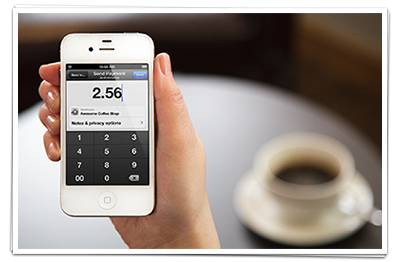
Starbucks US Takes 3m Mobile Payments Each Week

Starbucks chief digital officer, Adam Brotman, has revealed at the annual shareholder meeting that the company is now taking more than 3m mobile payments in the US every week. “We’re a leader and its accelerating. At this rate, about 10 per cent of all tender in US stores will be mobile payments by the end of this year,” he said.

Speaking to investors, Brotman said that the company now has 10m active monthly users on iOS and Android. “We’re adding another football stadium every week, about 100k downloads,” he added. The company’s mobile sites and apps combined reach 34.8m unique people every month, “more traffic than the amount of web visitors to the New York Times and Wall Street Journal combined.” Mobile app users will now be able to collect loyalty points and pay using their smartphones in Starbucks’ new Teavana stores.

Starbucks CEO Howard Schultz opened the annual event with news that the company is nearing its all-time high valuation, currently standing at $43bn. In the last three months, it has opened its first store in India, along with its first and 800th in China.

Despite recent scorn for tax avoidance, Starbucks was named the fifth most admired company in the world by Forbes.

Written for Mobile Marketing Magazine and first published here: http://www.mobilemarketingmagazine.com/content/starbucks-us-takes-3m-mobile-payments-each-week

PayPal and Jadu Launch Weejot Charity Web Apps

Jadu has launched an app creation platform integrated with PayPal’s Express Checkout to help charities create web apps that can quickly process tablet and smartphone donations.

Weejot was launched with the Alzheimer’s Society by Suraj Kika, CEO at Jadu, who demonstrated the platform. “It allows non-technical people to build apps in real-time,” he said. “You can deliver to any device without app store approval. I’ve just built an app in one and a half minutes.”

The apps can help fundraising managers capture data on who is donating, where, using GPS, and why. They are responsive and adaptive to different screen sizes, including tablets, but don’t work on older handsets. If charities have developers in-house, they can build their own custom templates, but as the platform is free for a year, and negotiable thereafter, it is designed to be used by chairities without large budgets. The platform is cloud-based and open source so any updates made by developers can be shared with the whole community.

Cardless payments

PayPal currently has 123m users and enables people to pay on the platform without entering their card details. Using PayPal, charities can build in monthly donations so users can schedule payments like a DirectDebit. Although Kika said there were no plans to integrate with other payment sources, developers can wire in their own. The apps natively supports Giftaid.

John Lunn, global director of PayPal Developer, said that PayPal already has more than 300,000 not-for-profits collecting donations on its platform, processing $4.6bn every year, but only 3 per cent are currently coming from mobile.

He suggested that future applications could see charities have NFC tags or QR codes on street fundraisers’ clipboards to make it simpler and feel safer to sign-up in the street. He also highlighted that by using PayPal Now, charities could take on-the-spot chip and pin payments using a mobile device with the chip and pin reader. “We don’t want to interfere in someone’s decision to do something by putting too much in the middle. Weejot Donate makes simple impulse things easy.”

Download, tweet and like

Users can download the web apps to their phone, whether that is singly, or as an ‘app store’ from the relevant charity. The charities can add in Twitter and Facebook automation so users can either communicate to others that they have made a donation, or like the Facebook page. They can also ask users to tell them why they made the donation.

Liz Monks, director of fundraising at the Alzheimer’s Society, said that charities need to use technology in ways that suits the donor. She pointed out that during the recent Comic Relief campaign, more than 60 per cent of donations were made on mobile between 9 and 10pm.

Written for Mobile Marketing Magazine and first published here: http://www.mobilemarketingmagazine.com/content/paypal-and-jadu-launch-weejot-charity-web-apps

AWARE Appoints Former News International Innovator

Ted Nash, a British entrepreneur who became the youngest person to get 1m downloads in the App Store back in 2008 when he was just 17, is leaving his role as head of digital product at News International to join lean start-up AWARE.

Joining the mobile agency as Director of Innovation, Nash will work alongside the company’s founders, Elina Hedman and Andy Bennett, on business development and strategy, as well as looking at emerging products and technology. Now 21, Nash already had a number of viral app hits, including Fit or Fugly and Rack Stare, before joining News International to work on mobile properties including The Sun and The Times.

“I joined News Int to get a better understanding of how start-up life differs from working in a corporate, the politics and bureaucracy that comes with the territory, but more importantly, to help one of the world’s biggest companies transitiion from a print business to a digital one.” Of his appointment, Nash said: “I truly believe we have the ingredients needed to create a unique and exciting business. On top of this, it just so happens they are lovely people.”

Although less than a year old itself, AWARE has just re-iterated its website. Elina Hedman, director, said: “Ted epitomises the same principles that we had when starting AWARE – working quickly, wasting little, releasing software as often as possible. We have an iOS based messaging service on its way – something that will really disrupt the traditional messaging paradigm.”

Here’s an interview we did with the company back in December.

Written for Mobile Marketing Magazine and published here: http://www.mobilemarketingmagazine.com/content/aware-appoints-former-news-int-innovator

Level39 Tech Hub Opens at Canary Wharf

Occupying the 39th floor of Canary Wharf’s rather exclusive Canada One, Tech City’s newest accelerator is committed to transforming the financial sector that surrounds it, the shopping centres beneath and to enhancing the smart city technologies on which the area was first built.

This is not an attempt to “copy and paste” Shoreditch, said Eric Van Der Kleij, Head of Level39 and fintech entrepreneur, rather to be complementary to other tech hubs in the Capital and become the focal point for financial technology in London. The Mayor of London, Boris Johnson, marked the opening by unveiling a (rather suitable) digital plaque.

From meat shop to £1m pad


Canary Wharf already has some 7,000 people working in tech companies like Thomson Reuters and Ogilvy and Mather. Level39 has now welcomed its first businesses, which are competing in Accenture’s FinTech Innovation Lab start-up competition. This is sponsored by 14 of the overlooking banks, including Barclays and Capital One, and is backed by the Mayor’s office.

Digital Shadows, among the first tenants, is a cyber monitoring service created to help companies manage the ‘digital footprint’ left by social media, mobile and the cloud. Having started off as a two man band working above a meat shop in Farringdon, the company is completing its 10 week programme with mentoring from four banks in an office which is worth around £1.1m and used to be occupied by KPMG.

Government meets hackers


The accelerator space houses four sandboxes, including one called ‘Eastminster’, which has already been used by the Ministry of Justice to discover how they could use their procurement power to drive the economy, has event space for 250, the obligatory open plan eatery complete with iPad-controllled coffee machine and a board room. A hackday called ‘Hack (Make) the Bank’ to try and devise a new kind of banking was already underway.

A club lounge, with a membership fee to pay for the space, is half price for any business angels and VCs who are prepared to mentor the young companies. “They teach start-ups how to solve their problems faster. We focus every day on helping the companies get traction through mentoring – it is worth more than investment”, Van Der Kleij said. There are hotdesks available, along with more permanent work space. “If you ask us to build you a 2000 person facility – we would do that for companies rather than punishing them for growth.”

Cross-rail promise


Downstairs will be a “living lab for next generation retail technology” located in some of the “highest yielding shopping centres in the UK” he said. Level39’s future cities strategy will be unveiled later this year and much of it will be centred in the new Wood Wharf development. Van Der Kleij promised that Canary Wharf’s new cross rail station, with a 39 minute journey to Heathrow, would be completed by 2015, “years ahead of schedule”.

Canary Wharf Group has issued a call for companies and entrepreneurs to apply to be based at Level39. Click here for more info.

Written for Mobile Marketing Magazine and published here: http://www.mobilemarketingmagazine.com/content/level39-tech-hub-opens-canary-wharf

Spotlight: Droplet Cardless Mobile Payments Startup

A mobile payments service is launching in London with a very different proposition to other solutions coming onto the market.

The Droplet iOS app enables its users to load money onto their phone by direct debit or using their bank card so they can ‘send’ payments to merchants or friends for free – paying anyone who has signed up to the service.

The service has been trialled in Birmingham with 60 merchants signing up so they can accept instant mobile payments and take advantage of the company’s ‘no transaction fees’ offer. Initially people could pay at participating retailers by scanning the unique merchant QR code in store, but the app now works with the phone’s GPS to identify who to make a payment to. Users can browse a map for Droplet merchants and see who is offering special deals.

Droplet is launching in London on Wednesday and the company says it is in negotations with several ‘national retailers with shops on every high street’, with the first partnership to be revealed at the event. There is a one-off £1 charge to make the link between the app and the bank account being used to make direct debits – which is then given back to you.

Monetisation will come from the company’s ‘tools marketplace’, which the company’s CTO, Will Grant, sees as becoming the ‘app store for payments’. Developers will have access to the company’s APIs so they can create and sell customised tools, including things like ticketing and loyalty funtionality.

“We know payments really well but we don’t know about things like tickets or car parking – the marketplace is going to be great for us and great for them,” said Grant. Merchants can add a Droplet key to their till and receive email or push notifications when payments to their Droplet account have been made. The company is also working with ePOS companies to integrate the technology directly and offer different solutions within the marketplace. Merchants can also use a smartphone or tablet to monitor their account and reconcile the Droplet balance with their till.

“We felt having a card reader was almost a generation of technology backwards, you’re still relying on people putting their card into the reader. Droplet is taking the friction out so hopefully people will need their card less. We’re really good for smaller retailers because there will be no monthly charge for a card reader but we’re also looking at bigger retailers too.”

The app will be launched in other major cities across the UK, including Bristol, Manchester, Leeds and Liverpool.

Written for Mobile Marketing Magazine and published here: http://www.mobilemarketingmagazine.com/content/spotlight-droplet-cardless-mobile-payments

Google Removes Ad Blocking Apps from Play Store

Google has removed all ad blocking apps for Android from its Play Store, including AdBlock Plus, which we reviewed and spoke to the creator of when it launched in November. AdBlock says that this ‘unilateral move threatens consumer choice’.

AdBlock Plus is a free tool created by an open-source community that its creators say helps users avoid misleading, malicious and distracting advertising. The app currently blocks all ads but the creators planned to have a ‘whitelist’ of acceptable ads – similar to its desktop version – along with ad filters for users.

Ad blocking software violates section 4.4 of Google’s Developer Distribution Agreement by disrupting the ad funding model which enables developers to offer free apps. “We remove apps from Google Play that violate our policies,” a Google spokesperson said.

“We believe that the user, not Google, should be in charge of what kind of content can be displayed on their device,” said Till Faida, co-founder of Adblock Plus. “Of course it’s important that developers can still monetise but many overdo it or use ads that present a privacy invasion or promote malware. We encourage advertising that is done appropriately and conforms to an acceptable ads policy, which is debated and decided in an open public forum.

“By unilaterally removing these apps, Google is stepping all over the checks and balances that make the internet democratic. People should be really alarmed by this move.”

Android users can still install Adblock Plus from the AdBlock website.

Written for Mobile Marketing Magazine and published here: http://www.mobilemarketingmagazine.com/content/google-removes-ad-blocking-apps-play-store

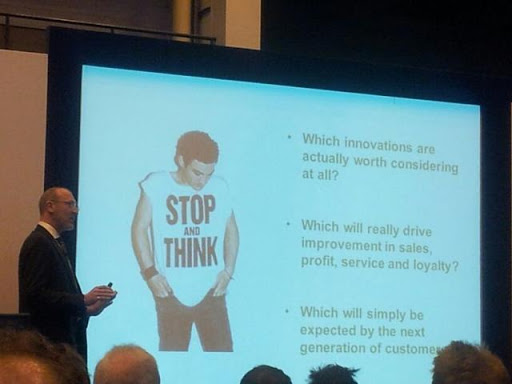
John Lewis IT Head Talks "Filtering Out the Noise" in Mobile

John Lewis is held up as something of a model business in the retail sector, with its democratic structure and lean approach to bricks and mortar – it has just 35 stores serving the whole of the UK.

In his keynote at Retail Business Technology Expo, the company’s head of IT infrastructure, Julian Burnett, explained how the organisation approaches new technologies.

“There are endless new a novel ways to explore technology. The question is, how do companies differentiate themselves from competitors and create an interesting proposition for customers? There has been an explosion of new channels – many of them are relevant – so you have to decide how relevant they are to your business.”

The company trialled an augmented reality ‘magic mirror’ in its Oxford Street store – but Burnett admitted that it did not increase sales or “create something compelling and sustainable for the business”, so the retailer did not continue with their experiment.

He said John Lewis will be trialling RFID chips in its clothing departments soon, which could take the form of tagging clothes to monitor stock levels, automatically re-order items and help staff find things that have been ditched by customers.

“You have to get used to failing fast in innovation – you can waste a lot of time, money and energy if you don’t. You know when you’ve found a winner if it has a sustainable role to play in your organisation.”

Gathering data and mobile payments


The company is starting to use technology in stores, possibly a mobile wi-fi solution, to gather anonymous data about shopper behaviour to help maximise the spaces they own and rent.  Burnett said this was only “initially on a passive basis”, so will potentially lead to opted-in location-based loyalty programmes.

On mobile payments, he admitted that John Lewis isn’t certain on which way it is going to go. “For an organisation like ours – it’s a big bet to place on the technology in this space. Will we all be using mobile phones as digital wallets? We’re not sure. Are we going to get to a position in five years’ time where some of us have gone down a blind alley? We’re still hesitant on the whole topic of payments.”

Burnett was excited about the potential for new technologies to improve the back-end of the business. Last year, John Lewis invited 30 British businesses to tackle three real business challenges in its retail stores. The winners were Black Marble, a software consultancy firm who offered a tablet solution to the problem of stores being flooded with last-minute back-to-school shoe shoppers. This is now being trialled in three stores, and the competition will become an annual event.

The company has an innovation board that meets monthly to consider a whole range of challenges and opportunities. They recently asked the partners (that’s everyone in the company) to suggest their own business improvement ideas – and received 127. The eventual winning idea will be trialled and if it meets the business tests, it will go into full scale implementation.

Balancing innovation and investment


On big data, despite noting the “big hype”, he said all retailers and other industry players are trying to work out how to bring together the large amounts of structured and unstructured to gain insight. “Back office data is outlegging the level of data in the front office,” he said. He also praised the cloud. “We don’t need to own anything. The pace of change that we’re faced is so dram that our ability to respond as an IT function makes it all but impossible to run traditional data services.” He said they are also actively looking at how John Lewis can take advantage of app stores for corporate purposes.

“We have to balance innovation with 50 years of investment in IT infrastructure. My job is to filter out the noise and focus on the things that will give us the best advantage against competitors on behalf of customers and partners.”

Written for Mobile Marketing Magazine and published here: http://www.mobilemarketingmagazine.com/content/john-lewis-it-head-talks-filtering-out-noise-mobile