Category Archives: mobile

Gates: Microsoft’s Mobile Strategy “Clearly a Mistake”

In an interview with CBS, Bill Gates admitted that Microsoft’s mobile strategy was “clearly a mistake” and it didn’t allow them to “get the leadership” against companies like Google and Apple.

Asked about current CEO Steve Ballmer’s leadership, while Gates said he believed that lots of “amazing things” had been done in the last year, including Windows 8 and Surface, he admitted: “no, he and I are not satisfied”.

Having set out with the mission to have a “computer on every desk and in every home”, and succeeded, the company is still clearly banking on mobile to make sure it is now also in everyone’s pocket. But is it too late?

Written for Mobile Marketing Magazine and published here: http://www.mobilemarketingmagazine.com/content/microsoft%E2%80%99s-mobile-strategy-%E2%80%9Cclearly-mistake%E2%80%9D-says-gates

Mahala Social Marketplace in beta

Mahala, a social network monetisation platform, is set to launch this month, enabling anyone to buy and sell products on their Facebook wall and other platforms via a secure QR code (S-QR).

The Mahala Mobile Shopper app is in beta and will be available soon on iOS, Android and BlackBerry World. Buyers simply link it with their PayPal account and scan any QR code from the company. Sellers can create an S-QR for each product or service, upload it via the Mahala portal and then share it.

The company believes this will help independent musicians, film makers and artisans to sell their wares without the need for an eCommerce site. The codes can also be placed in print or on other surfaces, like t-shirts.

Asked if this is a first, a company spokesperson, said: “It is the first. Security has always been the issue. It is not as easy as it looks. The security and convenience behind Mahala’s solution are key.”

The platform was born out of an initiative to bank the unbanked in South Africa. Sonny Fisher, CEO of Skynet Technology Group, said: “This marks the culmination of four years of hard work by our teams of global experts. By securely monetising the social networks, we have staked our claim in the payment space. This is the first of many revolutionary payment solutions that we are rolling out globally during the course of 2013.”

Written for Mobile Marketing Magazine and published here: http://www.mobilemarketingmagazine.com/content/mahala-social-marketplace-beta

Fab’s Mobile Users Spend 20 Per Cent More

Fab, the online design product marketplace, has found that its mobile users purchase 20 per cent more items per order than PC customers, with 30 per cent of total sales now coming from its mobile apps. 

This figure, the company says, sometimes reaches above 50 per cent. People who use Fab’s mobile apps convert to purchasers more than twice as often as web-only users and they purchase twice as often, the retailer added.

“Success on mobile is now a barometer of a company’s success,’” said CEO Jason Goldberg. “It is not an understatement to say that Fab is a breakout mobile retailer.”

Fab has introduced updates to its iOS and Android apps, including improved search, browsing and filtering to enable mobile searchers to find items by product type, colour, price, popularity and availability.

The company, which prides itself on the sociability of its user-base, has also introduced Fab profiles so fans can bookmark and display all of the items favourited and purchased. Social has been a key part of the network’s growing success, with 50 per cent of its members coming from social.

The retailer, which launched in 2011, currently has 10m users who can browse up to 15,000 products from designers at any one time.

Written for Mobile Marketing Magazine and published here: http://www.mobilemarketingmagazine.com/content/mobile-users-spend-20-cent-more-finds-fab-design-marketplace

Mobile a Big Success in Record Year for BBC iPlayer

Mobile now makes up a quarter of all iPlayer traffic after a 177 per cent increase in smartphone and tablet usage during 2012. For the first time in its history, PC traffic made up less than half of all visits, 47 per cent, in December. Along with mobile, connected devices, including games consoles and smart TVs, make up the remainder.

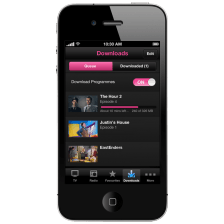
The iPlayer app has now been downloaded 14m times, including 300,000 on Christmas Day alone. Mobile downloads of BBC programmes have proved a massive hit, with 10.8m downloaded to iOS devices since the service launched in September. They have quickly taken a 6 per cent share of viewing on mobiles and tablets. The majority of viewers download programmes at 10pm and watch them on the way to and from work at 7.30am and 5.30pm, the BBC has found.

Record usage

2.32bn TV and radio programme requests and 36.5bn minutes were consumed across all platforms during 2012. This is 34 per cent more time spent watching iPlayer than ever before. December continued to be the most popular month, with a record 217m requests for TV and radio programmes, a 23 per cent increase on 2011.

2013 has had a strong start, with 6,732m requests for TV programmes on January 1 alone, the most ever seen in 24 hours. The Olympic Opening Ceremony topped iPlayer viewing, followed by Top Gear and Sherlock.

Written for Mobile Marketing Magazine and published here: http://www.mobilemarketingmagazine.com/content/mobile-big-success-record-year-bbc-iplayer

Facebook Will Monetise Instagram – But How?

Written for and first published here: http://mobilemarketingmagazine.com/content/facebook-will-monestise-instagram-how

For the early-adopting hipsters that popularised the photo-sharing app Instagram, its buyout by Facebook was welcomed like their mum turning up wearing skinny jeans. It was inevitable that change was on the way and Facebook has now begun testing the service as its route to making money on mobile. Just as they find out their mum has started hanging out in East London.

Facebook has so far proved that you can have 1bn users and not be making enough money. And as a publicly listed company, it really needs to start making something back for its shareholders, particularly on the costly buyout of the Instagram app company. Of course, as Instagram’s co-founder, Kevin Systrom, said in a clarifying blog after the news spread, and suggestion of a boycott gathered pace, the service was created to become a business.

While he has denied that the company will sell users’ photos, social advertising in-app, with branded accounts and the potential for your preferences to be considered as endorsements are well on the way. While Instagram says on its website that it is looking at ‘innovative advertising’, this sounds very similar to what Facebook is doing, and is struggling to monetise.

But if I like something on Facebook, or follow an account on Instagram, does that mean that I advertise it? Questions have already been raised about whether people have even ‘liked’ things that appear on their Facebook feeds, and some have even claimed that dead people are managing to endorse brands from beyond the grave.

“Our main goal is to avoid things like advertising banners you see in other apps that would hurt the Instagram user experience. Instead, we want to create meaningful ways to help you discover new and interesting accounts and content while building a self-sustaining business at the same time,” Systrom said.

So what does the future hold for Instagram – apart from the inevitable need to generate some cash? As with many changes that Facebook has introduced, while there is the usual push back and the most determined leave the service, many people accept them as the price of free access. If a service is free, you are the product, so the saying goes. Users have to ask themselves what they are comfortable with sharing while accepting less control. They have until 12 January to remove their profiles before the experiments with brands and advertising start to happen.

Instagram could opt for a paid-for, ad free premium service, although this could reduce the appeal of its inventory to brands by reducing the number of affluent, desirable advertisees. Microsoft computer science researcher, Jaron Lanier, told Newsnight: “The internet has to be about more than advertising or it’s a path to nowhere.” Alluding to a looming advertising bubble, he said that if we wanted to build the ‘information economy’, people have to be able to share money and buy things on Facebook. But that means they have to trust it.

The question has started to be asked – can and will people start charging for their data? Or could they be given more opportunity to say ‘yes, I want advertising about cars, holidays and business solutions, please do not send me things about…’? For more on what these developments could look like, see i-allow.

Could this very 21st century problem end up with one social network bringing down another? The #boycottinstagram campaign on Twitter sure hopes so. Or is this all just a Twitter storm in a tea cup?
Meanwhile, Facebook’s founder Mark Zuckerberg has announced the donation of $500m worth of Facebook stock to charity…

Women in WirelessLondon -on startups at the Wayra Academy #WiWstartups


Telefonica’s Wayra startup hub couldn’t have been a better choice for Women in Wireless London’s first panel discussion. Wayra was started in South America, and is so-called because the word means a change of breeze, or a change of direction. There has been a great deal of attention of late around the question of women in the boardroom. Promoted onto the agenda by the publishing of a government review, the Evening Standard and then the BBChave both taken a stab at answering one of modern life’s most pressing questions: ‘why aren’t there more women in top jobs?’

This panel went some way to offering an alternative. Voted for by the audience at the Women in Wireless launch back in April, it appears many women want to be their own boss. Chaired by Olivia Solon, Associate Editor of Wired.co.uk and one of TechCrunch’s 100 Tech Women in Europe, but with her magazine confined to the ‘men’s interest’ section of WHSmith, she knows only too well what it’s like to be a woman in a bloke’s world.
She was joined by:
Michelle Gallen – co-founder and CEO of Shhmoozethe people discovery app for professionals- and TalkIrish.com an Irish language learning platform
Michelle likes straight talking, dark chocolate and Irish whiskey. She had delivered a project for the BBC ahead of schedule and under budget,  “it rocked”. Would she get a bonus? No. “I hadn’t a thing to go to and I walked”.
Claudia Dreier-Poepperl – founder and CEO Addafix – a caller ID service
Claudia wasn’t happy for a long time. The startup she had been a member of since day five had been acquired and acquired again. She was in the UK. Its HQ was in the US. “If I can put all that energy in to make somebody else rich – I can try for myself”.
Muriel Devillers – LUMU Invest – a provider of seed funding and mentoring
Muriel Devillers “married had children and then had a divorce… I thought I had to do something”.  She went on an adventure and started four pirate radio stations. She is now a business angel, advising and supporting startup projects.
Yael Rozencwajg – founder and CEO YOPPs Digital Media
Yael had a ‘typical life’ and was well-known among Paris nightclub scene. After two years, she decided to earn money from it.
Sabrina McEwen – communications executive for Hiyalife – a platform to co-create your life story using memories, a Wayra startup
Sabrina went from a corporate to… a funkier business, but still corporate… and had a difficult boss. She wasn’t intending to join a startup but hasn’t regretted it one bit. At Hiyalife, she is surrounded by “passionate people who want to succeed… interesting and full of ideas”.
Olivia: So you’ve got your idea on the back of a napkin… what do you do next?
Muriel: It’s not an easy one – I was travelling the world for over five years looking for the disruptive ideas. I listen. When I say ‘wow’ I’ve fallen in love with the idea. I get into the team to push, open my network, make you work.
Michelle: There was a gap in the market. There were 59 million people with an Irish passport and I was leaning Irish from 40 year-old books… Perhaps I wouldn’t sell my house… But today you can test your assumption. If you’ve got 50 people signed up… go for it.
Claudia: I had to find techies, to test whether the task was a yes, no, or a possibility. They have to be on the same wavelength, can you trust them? Perhaps find them from a previous job. Can you build something, a prototype without any funding? You don’t need a big amount of funding to get you through that. The further you get, the more impressed any business angel will be.
Olivia: Once you had launched – what was the biggest misconception about having a start-up?
Yael: Don’t be afraid of failing. Don’t worry about the money. The idea, the project has to be the main thing at every step. I strongly advise you to make mistakes – we learn after making mistake, misunderstanding the marketplace and failing.
Claudia:  Everything takes about 10 times longer than you think – time, energy, money, contingency is never enough. Over the years you become more relaxed about that – four weeks waiting on a contract from a big corporate is like four years for you.
Muriel: Invest your own money – this is showing in your guts that you believe in it. Use crowd funding – especially when you start. Friends and family support will show you are right and boost you to go further.
Michelle: No one tells you about maternity leave when you’re starting out on your own.
Sabrina: But there is actually lot of support.
Olivia: So what about the pitch process? What’s the worst pitch you’ve seen?
Muriel: 27 slides, loads of numbers. The best way to pitch? Please show me your guts. I don’t care about slideshares. I need to feel the love in three, four, five slides – don’t ever put your speech on it.
Olivia: How do you get a work/life balance?
Claudia: You don’t. You have to force yourself to stop – travelling all the time is bad for your health.
Michelle: 9am-11pm and then drinks gives me five hours in the week to see my baby. I want my friends to call me out on it.
Yael: You need time management – take distance from your project and see your friends.
Olivia: Studies show that men are better at multi-tasking. No?
Muriel: We are multitasking!! Pregnant, working… To risk and invest, I think we do it better.
A lot of VCs are male but business angels are mostly women. When you believe in it you go for it. We know how to push it to minimise the risk.
Olivia: Woman in tech – more men than women – advantages/disadvantages?
Yael: In tech, there is a big opportunity for women to reach the men’s table. Keep in mind – women have the power to connect and support each other. We trust in ourselves, focus and bring our self-confidence.
Muriel: I am a woman in a man’s world. The financial world. And I disrupt that. I shout. I put my fist on the table. What I want to see is teams build projects together – men and women together – we have qualities and men have qualities. We can approach it from 360 degrees.
Why do we get married and have children? Because we are complimentary – in your children, you integrate your qualities together.
Claudia: It depends on the situations. There are always so many men at tech conferences. If you are trying to sell something, I love it!
Muriel: There are now more than 60 per cent women studying tech in universities.
Michelle: There are no queues for the toilet when you’re a girl in tech! You can start doing the ‘I’m the only girl in the village’ bit. Try not to analyse – just be. Support everyone and call them out on things. When guys say ‘you have to have balls’, I say ‘talk to me about guts and I’ll show you them’.
To the audience.
My start-up isn’t working…
Michelle: I spent my 20s having really crap relationships. I was late to the party when it came to settling down. Be slutty as a startup – split up, lose it. You say it’s your baby, but it’s not. You wouldn’t be so precious about it.
Muriel: Branding is 60 per cent of your budget. There are co-working spaces all over the world – be together as much as possible, all you need is a place with a table, wifi, people to talk with and that’s all.
Do women think big enough?
Michelle: If you’re going to put the hours in, you have to care about it. If you’re ironing, you go for it, same if you want to be the next Facebook.
Claudia: The business has to be scaleable.
Muriel: Dream global before dreaming local and you will succeed. Make us believe in your dreams.
Yael: The world is not open to you; you have to open the world.
Olivia: One tip for the future?
Michelle: Always do your pelvic floor exercises and never fake an orgasm
Claudia: If the others can do it you can do it
Muriel: Believe in your dreams
Yael: Live them
Sabrina: Don’t bother convincing the non-believers