Category Archives: Uncategorized

Are You Ready for this Jelly?

Jelly amendIs it a marketing tool? Is it a global empathy engine? Or is it a load of fuss about nothing? Perhaps I should just ask the digerati currently crowding around visual Q&A app Jelly, created by Twitter co-founder Biz Stone…

After linking the app with either Twitter or Facebook, the mobile-first search platform enables users to ask questions of their friends and friends-of-friends using pictures as the prompt.

‘Point. Shoot. Ask’ are its limited homescreen instructions. And then add a doodle to highlight a part of the image if you like.

From ‘What jacket should I get?’ to ‘shave?’, with an attached picture of your face, or ‘what % of users now say NO to push notifications?’, just snap a photo on the fly or upload an image from Google. You can also forward messages by email or text, with a link for the recipient to sign up, if you don’t get the answer you’re looking for.

It’s been likened to online question platform Quora, without the discussion and with a greater social element, a bit like Yahoo Answers but more good-looking, with elements of Snapchat, Tinder, Chatroulette and Instagram… Or perhaps an app for people who haven’t discovered any of these things yet?

Unlike Quora, Stone says it hasn’t been built to encourage discussion but glean answers quickly from a trusted network. The founder also says one of its main features is to make it easy to help others, which might naturally discourage the facetiousness experienced on other social networks… But the general rule of thumb with online services is ‘build it and the trolls will come’.

So what is this really all about? It actually seems to lend itself rather well to marketing and is worth having a play if you’re not too busy Facebooking, Tweeting and Pinning. You can get fast customer feedback or help with product development, for example, all for free. But then what’s really in it for users and how does Jelly get a good number on board to begin with? It’s no good if only marketers turn up to the party. No offence.

Search marketing has long been the undisputed winner on mobile, with Google the crowned prince, but perhaps it’s due a refresh for 2014? As others are grasping around voice, perhaps visual and crowd is the way to go?

As a Q&A company, the founders are already asking users what else they’d want from the service, with answers including question categories and a search function. Although the platform is not being built within Twitter’s ecosystem, add Twitter, Vine and Jelly together and you get a reasonably nifty social toolbox.

So. My initial assessment?

If you want facts, try Google. If you want opinion, ask Facebook and Twitter depending on the question. Heck, ask someone close to you if you dare! I’ll settle on it becoming search for the Snapchat generation… If a generation could ever be defined by a service where the whole premise is impermanence, built in order to send dodgy pictures.

But brands beware. Don’t think for one second think that the nice sentiment Stone outlines will stop people from snapping your staff/toilets/product and asking ‘what is going on with this? Next!’

Written for Mobile Marketing Magazine and first published here: http://mobilemarketingmagazine.com/are-you-ready-for-this-jelly/#ABFCzfqsfkqmtlAd.99

Mobile Traffic Doubles at Evening Standard and Indy

Image

ESI Media – which comprises the Independent, the i paper and the Evening Standard, all owned by Russian oligarch Evgeny Lebedev – has had an exciting few years.

From taking the Standard free and launching a concise sister paper to the Independent, the i, back in 2010, to hiring the youngest ever editor of a national newspaper earlier this year, the group has consistently evolved with the changing face of news.

“It’s a challenge for all print newspapers to maintain circulation and readership, and is even harder for paid-for titles,” says digital MD Zach Leonard. “But we’ve actually got more people reading Independent journalism today than ever before because of the absolutely radical growth of the website.”  Worldwide, the company now sees 30m unique users every month and only 55 per cent of those are now in the UK, he said.

As part of its most recent reinvention, which includes a facelift for the Indy, a new iOS app has also launched this week for the Evening Standard. An Android app and a dedicated Kindle Fire app are on the way in the coming weeks – the Fire delivers the second-largest audience share after iOS – with the same updates promised for the Independent before Christmas. The apps are all powered by Page Suite, chosen as something that would work for both the free London paper as well as the paid-for national title.

40 per cent of traffic is mobile

“A year ago, 20 to 25 per cent of our web reads were coming from mobile,” Leonard said. “Including our apps, we’re solidly north of 40 per cent every single month.” The new Evening Standard app combines digital elements with a PDF replica of the day’s paper, seeking to satisfy both those who enjoy the traditional linear view, as well as serving up dynamic elements no doubt with a younger readership in mind.

People will be able to see a rolling week of content, as well as gaining access to a 30-day archive. Yes! magazine, which comes out in print each Friday, will also stay in the app for an entire week. “We’re hoping the new app gives people a reason to check in with the Evening Standard on their way to work,” he said.

The app uses push notifications to alert opted-in users to the availability of the latest edition, as well as automatically downloading each edition in the background for the reader to view offline. Within four days of the app’s release, Leonard says the Standard is running around 50 per cent more additional page impressions.

Video and virtual-only editions?

A later release will bring video into the dynamic content section and Leonard said the company’s TV channel London Live, which is launching online and on mobile in the new year, could provide a tie-in.

The company is using both print and digital resources to support the production of this new range of apps and has committed to a rather gruelling-sounding digital production schedule, actively curating a digital edition of the Standard up to five times a day. Leonard says he hopes the paper will be able to deliver an entirely virtual evening edition in the near future.

ESI is actively working with the Audit Bureau of Circulations – the organisation that counts newspaper readership – to create a standard for measuring digital publications. “We’re seeing a move towards metrics that are a lot more robust,” Leonard said.

Native, RTB and transactional ads?

The company is now looking to ensure it can sell truly cross-platform advertising packages, in some instances encouraging its historic print advertisers to go digital. Within the Evening Standard app, as well as the upcoming updated Independent app, there will be IAB-standard ads, as well as overlaid and full-page interstitials between news content.

The group sells a lot of its premium inventory directly to brands, but they do have network and RTB partners. “ESI is currently more dependent on external sales partners for mobile inventory. We’ve been selling mobile ads for the last three years within our apps and the last 18 months on the mobile web and there is growth in terms of networks and RTB.”

“But developing really interesting embedded advertising is where the market is going – the highest premium spots, particularly, are about that,” he said. “We have sponsorship conversations but it’s much more intersting to build something into a content area. I’m really keen to explore transactions and shopping opportunities on our apps in the future.”

Written for Mobile Marketing Magazine and first published here: http://mobilemarketingmagazine.com/content/mobile-traffic-doubles-year-evening-standard-and-indy#7g9mw54TOFCGgo6y.99

A New Curriculum?

This is an article based on an interview with ed tech entrepreneur Gi Fernando on technology’s role in changing how education works. Gi Fernando is an investor in Freeformers, a company that trains young people from disadvantaged backgrounds alongside companies looking to learn digital skills.

I think we need to work harder to build a curriculum that unlocks students’ passions and enables them to solve problems they care deeply about. If you get them involved in projects where they can sort out problems by building things and making things, they are passionate to learn more. School panders to academic people who like learning for the sake of learning. But 90 per cent of people aren’t academic and they actually just want to be able to solve problems that they care about.

Creative does not just mean you’re good at drawing, and you can learn to be more creative. Some would argue the UK is number one for creativity for a whole number of things across the world. I’d say we’re almost creative despite ourselves! But we are a massively creative society – despite the curriculum, despite everything else. Creativity needs to be at the heart of curriculum as it comes out of passion.

Something like Apps for Good is a great model for this. The kids create an app around an issue, like a tool to help someone with learning disabilities learn better through the use of tech. The participants learn about building a successful business, hard skills like maths, soft skills like communication and the history of the problem they’re trying to solve.

Kids are told to turn off their phones when they get into the classroom. But like it or not, that is their communication device, making it more efficient for them to stay in touch with a bigger audience. With devices like this, kids also have the potential to learn larger volumes of stuff more quickly. Surely it’s better to incorporate this powerful computer into lessons, enabling the teacher to engage with students before, during and after?

The problem with teachers’ traditional knowledge transfer role is that knowledge is all there already, in real-time and always being updated. What a teacher now has to do is help young people distinguish the truth from untruth, ensure they know how to use knowledge effectively and also how to create knowledge. Of course the basics are still really important, but you have to embed that rote learning into something creative.

Teachers can actually start to have more one-to-one interactions because they are acting in more of a facilitation role; teaching assimilation skills, usage skills, interrogation of information and drilling down – not just rote learning. They also need more power to be 100 per cent inspiring kids, working with kids and getting the best out of them, which means they have to do less paperwork. Admin should be reduced by tech – automate it, or just don’t do it. Schools should make their own decisions, do it locally and be as creative as they can, and transfer best practice.

This actually doesn’t require as much of a shift for teachers as it does for those who build the curriculum.

Vocational versus non-vocational

People are really quick to say ‘or’. It should be ‘and’ not ‘or’ for vocational and non-vocational subjects. The division of them is a systematic thing from the past that deemed that doing something vocational meant you were ‘a bit thick’. Splitting people like this does both sides a disservice.

Freeformers participants learning by doing, do online digital missions, volunteer to transfer their skills to others, learn in the local coffee shop, do face-to-face stuff with mentors, as well as working in a dynamic startup-style classroom environment. A mix of vocational and non-vocational, human, not isolated.

MOOCs – Massive Open Online Courses piloted by tech teachers, which have become very popular – are still done by learners largely in isolation, even if a lot of people participate, which again only suits some people. You learn differently when you’re learning with other kids, you actually learn things from them, in the same way hanging around with friends at university is actually massively valuable.

Infrastructure

The value of centralisation should be around economies of scale, where you collect taxes and deliver a cheaper and better education. In theory the best education you should be able to get should be government doing it at scale. But free schools mean it’s easier than ever to set up a school or an adult education facility. You see industry getting involved in education and competing with the government – and unfortunately, I know where I’d put my money.

Tech shifts the focus to demand-side from supply-side – the demand from learners and industry for the right skills for people to get jobs and unlock the potential they have. What if Google starts to offer the best education? Part online courses, with face-to-face delivery through community buildings. And it could be free. People would vote with their feet.

Future campuses? I see different hubs with meeting spaces where TedX-type events are beamed in, with clubs and communities grouped around MOOC-type things and people work on projects they’re getting paid for.

University

I’d always tell people to study something they’re passionate about at university even if you’re not going to get a job directly from it. My parents made me do science because frankly I couldn’t make up my mind. Ancient medicine and French – whatever – go and learn something creative and then start making stuff at home. Doing art? Build stuff around art, solve problems you see using tech. If you do that, you’re more likely to be able to get a job you’re passionate about and have an advantage over other people in the industry.

What we’re seeing in the tech industry and other areas are moves towards a ‘micro-work culture’ – so learning something very specific with the idea that you’ll be working for the same company and picking up a pension just aren’t that relevant anymore. You might do four different things for eight companies or a number of different jobs within the same organisations.

Academic is not the same as bright. There are a whole host of people who’ve change the world that are not academic. But everybody from startups to the civil service to the corporate world judge people by how academic they are because we don’t really have another way to judge them. At Freeformers, you can actually see the corporate guys twig when they realise these kids are bright, they know their stuff, hey, they’re actually teaching us. At that point, any qualifications become irrelevant. And in digital, tech and creative industries more generally, a degree is not so important. I believe we really need another evaluation system about what ‘bright’ is.

Future of work

Knowledge and creative workers are the new factory workers, blue collar workers. Solving problems, using assets – that’s the future of most of the workforce. All levels in a company will have to be more creative and more tech-enabled. Tech will have massive effects – removing the need for performing automated tasks and driving competition – which will then call for really creative skill sets to be creative in serving the customer.

Space is already becoming high-premium stuff on the high street, for example. In many cases, you already pay ‘more for in store’, so to have that edge, the shop assistant really has to be able to offer a mix of digital and face-to-face skills. Suddenly, the job becomes quite skilled, transforming your typical ‘boring’ job into a skilled servicing job.

Tech jobs

There needs to be more creativity in government about thinking what the future’s going to be like. It’s all well and good ‘backing startups’ but they actually need to change behaviour in terms of embracing change. Doing a big project with lots of risk management is actually riskier than doing lots of small projects, some of which fail. What’s a few £10,000 failures compared to a huge $13bn one? Trying things with less money means your chances of success will be much higher and it will give a more diverse group of people access to government project work.

Government projects breed selection bias because they are so worried about making a mistake, they always choose the same people. There is a massive issue around diversity that also massively inhibits your ability to succeed more and more. There are those who know they have a selection bias and those who mean well but don’t actually know they have a selection bias.

Getting a job and being able to earn is still very important – in tech, people say ‘learn, earn and return’. You need to learn by doing all sorts of skill sets, learn how to interact with society, then earn respect, earn money, hopefully get a regular income and then give back and support other people. Tech is democratic and you will earn more money so we have to support people by  teaching them skills to earn more.

Tech founders are working hard to find the right talent – largely imported from outside the UK – but you should only do that alongside educating the local population to fill those roles. It really doesn’t take years. If we don’t sort education out and look to immigration to fill these role, we’ll get to a point where we’ll have an uprising because local people will feel the country is ignoring them. Particularly because they’ve had skills training overlooked because of inherent selection biases that exist.

Otherwise it just becomes a whole bunch of hipsters who are moneyed, it is a class thing that ceases to become about colour. I certainly don’t want the tech industry driving cliques and class barriers in the UK – we don’t need to do it.

Given its creative history, we have a very exciting opportunity to be a very British tech industry which is inclusive, driven, massively creative, highly experienced and less wasteful of talent – which is why I’m doing what I’m doing.

Written for Compass as part of its Education Inquiry http://www.compassonline.org.uk/a-new-curriculum/

Shazam Hints at 2014 IPO

Andrew_Fisher_High Res

Speaking to Shazam executive director Andrew Fisher, it’s easy to believe that the British-based company has the silver bullet for linking TV, radio, outdoor and in store, and is therefore well-placed to reap the rewards from this trillion-dollar market.

So far, the company has focused on using audio recognition for TV ads, bringing users additional branded content within the Shazam app, which ‘turns 30-second TV slots into three minutes of engagement’.

“If someone is engaged immediately, to go straight through to a call centre for example, the conversion rate and ROI is going to be far greater,” Fisher said. “So Shazam is helping traditional media budgets perform better.”

Fisher said the company is actively engaging with brands and agency partners around whether image recognition will become part of the Shazam experience, but he said to date, demand hasn’t been high enough. Through its audio campaigns alone, the platform has driven more than 500,000 users a year to buy $300m of goods and services.

Further growth

But Fisher points out that even with a user base of 350m – and growing by 2m every week – Shazam has only captured around five per cent of the potential global audience. “95 per cent of the opportunity is still in front of us,” he said.

Shazam went to market knowing the facts about smartphone penetration – growing, but not the majority of the world, yet – so has always offered support for feature phones in the 200 countries it is present in. The company’s relationship with Latin American telco América Móvil, from which it received $40m of investment back in July, was a key strategic play to help the company reach its next milestones of 500m and then 1bn users.

“What we now have the ability to do, in partnership with brands, is to give value-add offers to users who have already Shazammed a product, delivered when they are actually in a retail store. There is $1 trillion in total spend between global TV, radio and in store promotions – no other companies today are positioned to build and deliver on that experience for brands and advertisers.”

Partnerships and offerings

As well as creating more than 300 campaigns for 150 top-tier advertisers like Pepsi and Barclays, Shazam has a partnership with Nielsen to use its general viewing data, along with Shazam numbers, to work out campaign engagement figures. The likes of Twitter and Facebook are going further than this, securing deals direct with TV channels to create new ad revenue streams around second-screen social chatter.

Asked if any more data deals were on the way for Shazam, Fisher said: “Lots of people want to access our data because we have both the user’s preferences and their location. Although there will be scope to build more of these kinds of relationships, ultimately we have to protect our relationships with users.

“An IPO is a stated ambition for Shazam and it is my role to work with investors and prepare for that event as and when it would be appropriate to do that. We’re very focused on monetisation and revenue growth – being able to capture part of digital spend and traditional media spend enables us to grow revenue much faster. We will not be at a point to do our IPO this year, or at least in the first half of 2014.”

When asked how this IPO will compare to the likes of Facebook or Twitter, Fisher dismissed the comparison. “We believe we have created a new digital advertising category around media engagement. It gives brands the opportunity to extend engagement with target audiences.”

Written for Mobile Marketing Magazine and first published here: http://mobilemarketingmagazine.com/content/shazam-hints-2014-ipo#Dsr48OfkcIqYj17T.99

Technolotics Added to the Oxford English Dictionary

Just kidding language zealots, unlike twerking (see: Miley Cyrus), selfie (see: yourself, on Instagram, Snapchat) and omnishambles (see: the Coalition Government), technolotics wasn’t among 2013’s most popular new words and so hasn’t yet made it into the OED.

In fact, I’d like to think I made it up. A new portmanteau, created by the joining of the fields of technology and politics, because the phenomenon is visible just about everywhere:

// When Bradley Manning and Ed Snowden made the decision to leak information around US foreign policy and spying – does the whisteblower go to prison, while war criminals walk free?

// How both Google and Facebook are attempting to switch on the internet for the remaining 5bn – greater access to life-saving support networks, or just another 10bn ad-hungry eyeballs?

// Apple’s suicide-inducing supply chain – does our thirst for gadgets exceed our capacity to see human suffering?

// In local activism and political organising – are we Tweeting the revolution or breeding armchair activists?

// Used by regional governments – improving servicesincreasing transparency or just a better way for them to keep tabs?

//Barack Obama’s historic 2008 election campaign – a victory for the American Dream or an industry-standard advertising campaign?

All different. But all textbook technolotics.

There is big money in politics. And even bigger money in technology. The two together can put a 25-year-old solider behind bars, Twitterise a revolution and even help secure US election victory.

Although many see technology as a great liberator, Channel 4 reporter Sarah Smith said last week after an interview with Guardian journalist Glenn Greenwald, that the internet is now the US’ greatest enemy. Machines were supposed to decrease our workload, but many believe they have enslaved us. Prince Charles warned of this as early as 2000 and who can say today that they don’t their smartphone more than their partner?

Technolotics – the merging of technology and politics – affects everything, from the news that’s available to read, to the things we can buy. Definition: Pretty much everything. So here’s hoping it might make the Oxford English Dictionary in 2014.

Until then, we must march through the Eurogeddon, enjoying our Mummy Porn while we still can.

You might need to Google those, but that only feeds the monster…

::

Photography by Greg White

Written for Let’s Be Brief and published here: http://www.letsbebrief.co.uk/technolotics/

€100m Promised for Future Internet Companies by EU at Campus Party

Image

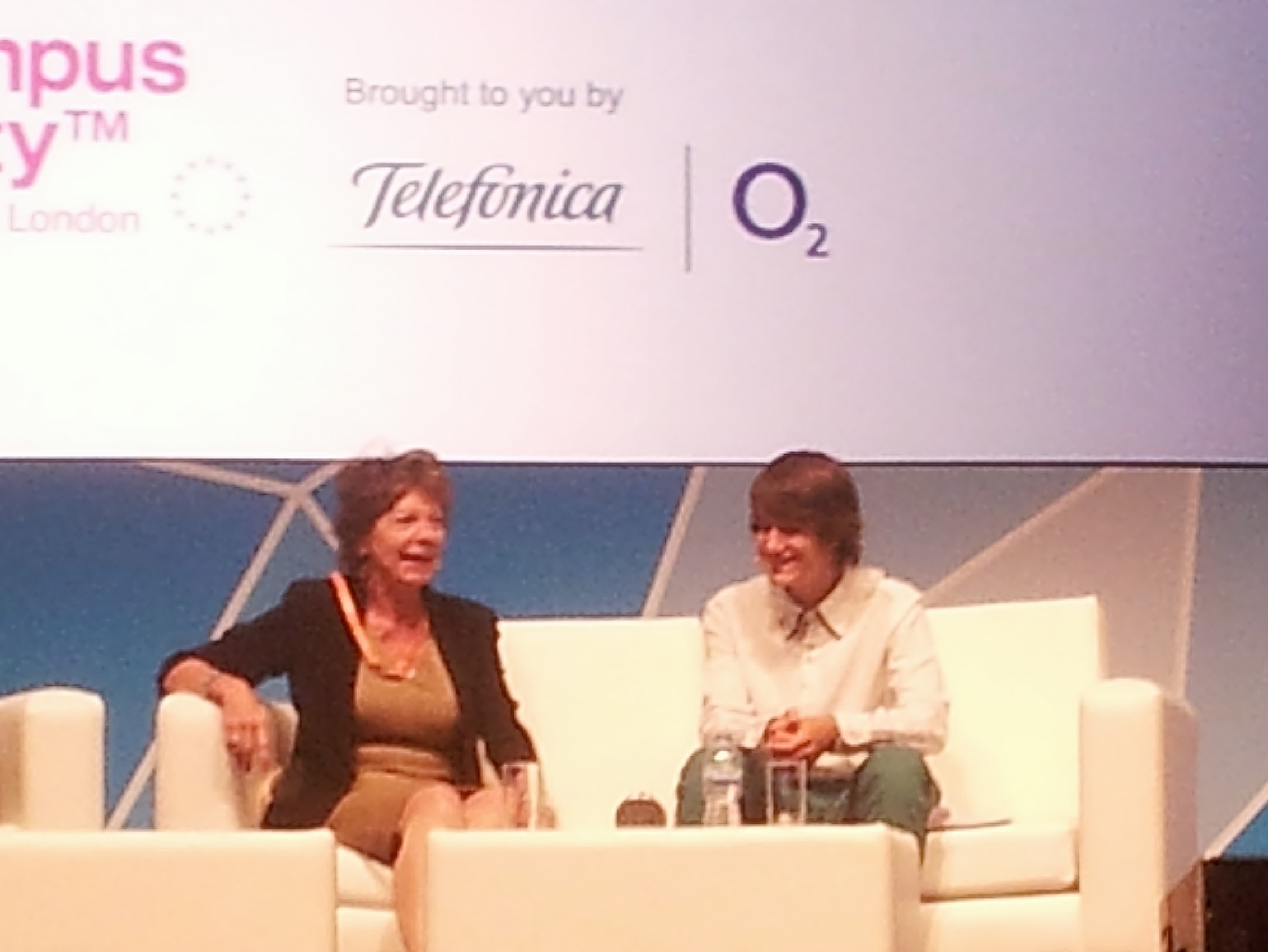
Neelie Kroes, VP of the EU Commission leading the digital agenda, has announced a €100m fund for European entrepreneurs to create ‘future internet’ businesses during 2014 and 2015.

The M2M market is already worth €34bn, Kroes told the audience at Telefonica’s Campus Party, and it could grow by 30 per cent per year, meaning trillions in global revenues by 2020. But she pointed out that while US and Asian tech company revenues have grown by up to 50 per cent in the last five years, many European companies had seen sales decline. “We need to change that,” she said.

The FI-WARE (future internet) project ‘to make innovative technologies available for all’ is a JV between the EU and major IT companies. The OpenStack, cloud-based resource comes with a library of free, open source tools to speed up the development process for internet-of-things apps across different platforms and sectors. There are already five trials of the platform taking place, in healthcare, transport and logistics, media and content, manufacturing and energy.

“From mobile devices to app stores, software, and IP networks, these are the ingredients that help American companies build a network and snowball to success,” she said. “It’s time we had more of them over in Europe too. Think about security and privacy by design, social connected TV, augmented reality, instant mobility or even smart farming.”

Kroes – a towering figure in the EU, aged 72 – was joined on stage by her 17-year-old advisor Luis Ivan Cuende, a young entrepreneur and winner of the HackNow contest in 2011. He said this project was an opportunity for the EU to create internet companies that respect users’ privacy.

In a final call to arms, the commissioner added: “You are best placed, not just to innovate, but to turn that innovation into real products, real services, and real jobs. Let’s stop with being modest in Europe.”

Written for Mobile Marketing Magazine and first published here:  http://www.mobilemarketingmagazine.com/content/%E2%82%AC100m-promised-future-internet-companies-eu-campus-party#z5Qrx35ydsBzAl7K.99

A quick intro to… Me! At my new political comment home Let’s Be Brief

Meet Kirsty Styles a digital journalist and youth activist. A proud Warringtonian, along with Kerry Katona, she is also an enthusiastic dodge ball player and (very) amateur comedian.

Kirsty has worked as a media campaigner for Oxfam and as a freelance journalist for local, national and specialist organisations, including The Observer, RockFM and the Sunday Mirror. In a brush with the dark side, or something of an undercover project, she has also worked in advertising.

Bringing a bit of street smarts and good old common sense to the world of political thought, Kirsty is an elected youth member of the left-wing think tank Compass. Passionate about social issues last year, Kirsty put herself in the thick of it and appeared on a BBC documentary about youth unemployment, which was screened on BBC3, and also featured on Radio1.

And oh, she hates being told that change isn’t possible.

See the original post here: http://www.letsbebrief.co.uk/a-quick-intro-to-new-lbber-kirsty-styles/

#Notpartof2012? How about Rio 2016?

Written for and first published at: http://www.letsbebrief.co.uk/notpartof2012-how-about-rio-2016/

Admit it. The cries of “Yes Jess!”, the shouts of “Go Mo” and the summer anthem ‘Gold on the Ceiling’ left you wanting more. I spent Super Saturday watching the big screen in Haggerston Park and I was carried away. We started talking about us as ‘we’, despite some of our deepest troubles being laid bare here just a year ago.

For an event that could have spiralled into the LOL-ympics, London 2012 has left an Olympic-shaped hole in the Universe. It took me some time to appreciate that this was not an event about fizzy drinks and fast food, weary with all of the pre-event advertising.

So this was actually about sport – about dedication and commitment – a call to arms. After ‘My Generation’ by The Who closed the celebration, Jaque Roggue, Head of the IOC said: “I call on the youth of the world to gather in Rio in four years’ time from now and celebrate the 31st Olympiad.”
Participation in sport among 16-24-year-olds in the UK is low and falling. It appears that in the upheaval between full-time study, job hunting and work, we stop taking part. For all our preoccupations with looking good, we abdicate the one activity that will help us stay trim and impress potential mates. The charity softball league I play for has produced six marriages.

But it was our Conservative government, who mock the alleged ‘prizes for all’ ethos of state schools and expanding waistlines, which scrapped our measly two hours of compulsory sport. Poet Laureate, Carol Ann Duffy, wrote an Olympic verse asking for school playing fields back, sold off to property developers, for every medal won. All of this government policy means that 60% of school children no longer play any competitive sport.

It was actually a hurdler that went to Eton who nearly didn’t make it to London 2012 because he was pushed towards academia as he was leaping over desks. Perhaps there is a leotarded gymnast in George Osbourne? And it was Yorkshire, in the relatively deprived northeast, which added 12 medals, proving that sport changes the lives of ordinary people. However, a third of the medallists went to private school, despite making up just 7% of the population.

A Guardian/ICM poll has found that support for the Olympic legacy is strongest amongst under 35s, who see hope for the future and the chance of a better world. Though the BBC declared Usain Bolt’s potential retirement as the ‘end of athletics’, this is the beginning for a generation inspired by the achievements of those 17 days.

There are 1400 days to Rio, and many winners in 2012 who ‘just picked up’ a sport. Samantha Murray, winner of the modern Pentathalon, said: “I’m just a normal girl”. The money that camera-friendly Olympians make from advertising cosmetics, fashion and cereals is an uncomfortable reality; or another perk of the job?

David Cameron was on the BBC sofa on Sunday pledging the same support for elite athletes going to Rio 2016 as there was for London. But how do you get up to that level in the first place? And what happens after that?

Jade Jones, gold medallist in Taekwondo, thanked her family and friends who fundraised so she could compete, which could become the norm as government money is shared thinly around. It might be this investment by communities that boosts us to further success, or perhaps Team GB volunteers will lead us into a community renaissance? Should schools coordinate this effort, if so, how do we get children, teachers, parents, politicians and sports enthusiasts involved? We should take the idea of the Big Society and stick it to them. Why do we let the rich be in charge – they are already powerful – how can they be expected to really have our interests at heart?

This is a 20-year job. And that means a little investment from you, us. You might not be the next Mo Farrah, but you might be the person who inspires the person who is. The reality of the volunteering effort is that more than 1 million young people still need jobs. We can’t be expected to endlessly work unpaid.

There were more cringe-worthy moments of course (George Michael in the closing ceremony), questionable commentary (“So how do you feel [about letting us down by not winning gold]?” said to sweaty and elated participants) and the heavy back patting at crisis well-averted. Bolt promised he would be back in the UK ‘when the tax laws change’, a powerful kick in the face for us, whose taxes made a huge contribution to the Games.

A charity has been set-up ‘Join in Sport UK’ with events starting this weekend. Sport is fun, try your best. Time will tell whether success was borne from a cynical need to look good, the Labour project that the Conservatives could have done without, and not a long-term commitment.
That’s all from me on this. Don’t forget we have the Paralympics still to come.

As Lord Coe said in his final speech to the crowd: “When the time came, Britain, we did it right.”

Yes Sir, just about…

#Notpartof2012: Part 2

Written for and first published at: http://www.letsbebrief.co.uk/week-2-notpartof2012/

So it’s the end of week 1 of the London 2012 Olympic Games (a banned syntactic arrangement from the list issued by organisers), and it’s now clear to me that Olympics is quite an annoying word to write again and again. That aside, unless you are on holiday avoiding it, there is an unmistakable air of the Olympics in London town. Like it or not, CBeebies and BBC Parliament have made way for wall-to-wall coverage of the greatest show on earth. Despite having no tickets, my bike, TV and my residence in East London have ensured that the events are very much inescapable.

Given that you can see the stadium from my house, last Friday raised a dilemma – to party, or not to party? Hearing that there were big screens in Victoria Park down the road, and with helicopters flying worryingly low overhead, the journalist in me decided to pick up a few beers and head down to take my place among the great unwashed for the opening ceremony.

Strike 1. Gated area, ticket-holders only, and leave your booze at the door.

Thousands of others had heard news of a massive communal telly-watching opportunity, but what we didn’t know was that while the event was free (unlike Hyde Park, where audience members paid £60), they were only letting 5,000 people in on the door. Ticket-holders only. Hmpfh. As a miscellaneous urban voice addressed the crowd behind the metal fence, the rest of the park, and the huge queue, were cast out into darkness. At least we still had our booze…

The following morning, I dragged my bigger half to an anti-Olympics protest which promised to bring together more than 40 groups, including Occupy London and War on Want. It was a bit late to argue with the whole thing, as they’d already done the launch party, but I was interested nonetheless.

The beardy weirdies were out in force, flanked by Socialist Workers and quite a lot of the world’s media, including Channel 4. A stroke of genius by someone, somewhere, had led to the creation of a printable t-shirt stencil that read ‘official Olympic protester’, which looked strikingly similar to the actual Games logo. Which does say 2012, if you hadn’t deciphered it.

While a non-corporatised and non-militarised Olympics sounded like just what I was after, I wasn’t sure the kids of the ALARM anarchist group, who assured me that I ‘didn’t get it’, when I suggested that there were different types of freedom, were the people to deliver it.

Strike 2. Get Ahead of the Games… Wait…

We’ve been warned to stay off the tube for what feels like forever, fearing even bigger crowds than we’ve grown begrudgingly accustomed to. Apparently, that PR message was received a lot more clearly than the one that said ‘don’t get North and South Korea mixed up, they really hate that’. Hotel rooms next to Hyde Park that were £500 a night are now going for less than £100, shops and museums say visitors are down 30% on last year, traffic has reduced by a fifth.

Small businesses, like my local pub, where the landlady told me she’d had the worst day in living memory this week, have been left out in the Olympic advertising wilderness as the big brands, who only put in 2% of the £9.3 billion budget, were given 100% share of voice. I cycled past a pub that had avoided any mention of the Games by chalking a crude, but understandable, podium on the board outside. That’s one for the underdog. I also saw two boys brandishing Visa signs, with no discernible point, other than for people to see them. We own 85% of RBS and we don’t command the same power over what it says and does. If we did, those ‘ISA, ISA baby’ ads would never have seen the light of day…

Strike 3. LOCOG makes even more money on tickets.

I’ve been waiting patiently for a knock at my door by a purple-shirted volunteer asking me to fill up an empty seat; asking anyone, as one does when hosting a party, to give the illusion of popularity. You can’t argue with soldiers (unless you are married to one, I’m sure!) getting tickets. But I do know that I barely remember being a child…

In true Olympic spirit (or just for a laugh), I’ve been wapping out the Games buzzwords to see how far it gets me. So far, it’s 1-1. ‘Get Ahead of the Games’ appeared to help when I asked a wandering PCSO if I could ride in the Olympic Lane rather the angry queue of normal traffic. He advised me to ride on the pavement. ‘Get Behind the Games’ did not work on G4S workers at Haggerston Park, who clearly weren’t strict process followers in their civilian lives, but were keen on the ‘process’ of me walking to an entrance at the other end of the park (visible from where we were standing), as bikes were not allowed in the one they were covering. Ughhhh.

Loving
– The weird sports no one knew anyone was practising
– Men owning gymnastics and women playing excellent football

Hating
– Medal envy – ignorance of silver, bronze, or even qualifying, as demonstrating significant investment of time and effort
– Not letting the Chinese have their moment – are we just worried that this the first Post-US Games?

#Notpartof2012: Part 1

Written for and first published at: http://www.letsbebrief.co.uk/notpartof2012/

There is nothing like being made to feel like a party pooper to stop people from raising genuine concerns.

‘Get Behind the Games’ has become the mantra of public figures and politicians keen to jolly up all those who just don’t seem to be able to see past the G4S security fiasco, or that the biggest global celebration of health and amazing ability has descended tiring and predictably into an event for the highest bidder. Given that tickets are going on the black market for £100,000 for the 100 metre final, how can I, we, really be involved?

On Any Questions on Radio 4 last weekend, former chancellor Norman Lamont said that the proposed Public and Commercial Services (PCS) union strike this week was “doing damage to our reputation”, and was timed to cause “maximum embarrassment while the world is watching”.

Well, yes.

The strike by frontline staff at the Home Office, including in the Border Agency, the Identity and Passport Service and the Criminal Records Bureau, against 5,000 job losses was called off with just days to go to the Olympics. The government claimed irregularities with the ballot. The union has said that they have been promised that more than 1,000 new jobs will be created. Nothing like a clear cut end to a disagreement…

I wasn’t sure whether the action was a good idea. It would make a big impact, certainly, and really highlight the need to keep the jobs that are now on the line, but the media coverage would have been unbearable. Any sense of the reason would be drowned out by front-page pictures of visitors queuing, babies in Wenlock suits with their lower lip out, to have their passports checked.

But really, we have known that we would be hosting the games for seven years. The Government has had two years in office with this knowledge. Why did they only find out two weeks beforehand that G4S wouldn’t be able to fulfil its commitment to provide security staff? How wasn’t security -sad world that we have created for ourselves in what should be a time of worldwide solidarity – top of someone’s list?

We knew that the eyes of the world would be on us, and it seems we buckled under the pressure.

If the world got the impression that workers are unhappy, jobs are being cut and private sector contracts aren’t improving standards, then they would be right. The media cannot report what doesn’t happen. They can only find bad news if something has gone wrong.

I want to support our Olympians and Paralympians to do things that I could never do. But I think we are all just as sick of the tales of incompetence as we are of finding out how brands are going to help us pick up our must-have Games souvenirs.

If more time had been spent managing projects, thinking about how to deliver something that we could all be truly part of and proud of, not scrabbling for the cheapest option in our race to the bottom, or worrying about the perception of the work, the whole project would have been seen as more successful.

Perhaps we, the people, can take this historic moment of competition to appreciate the one thing that makes us all the same. We are #notpartof2012, we are the Olympic Fringe. We have a mass communication tool at our fingertips, the largest collective in human history, and no doubt lots of lovely people with fun, and free ideas. We could do anything. Edinburgh ain’t seen nothing yet.

Why let the machine of the state take food to our mouths if we can do it, and feel good about doing things ourselves? This is ours, Britain, our Games. Let’s find some way to make it feel more like that.

I am #notpartof2012. How about you?