Author Archives: kirstystyles1

When are we going to eliminate the future need for aid?

First published for Oxfam at http://tinyurl.com/39qnh6a

Promises are like babies: easy to make, hard to deliver

The UK, under Blair and Brown came out of the 2005 G8 summit at Gleneagles with renewed hope of all G8 nations (minus Russia) finally delivering a generation-old promise of spending 0.7 per cent of GDP on aid.

Lost tourists or world leaders?

Lost tourists or world leaders?

But it appears that some of the wealthiest nations in the world had no intention of keeping it, and others will not be able to.

David Cameron, the new boy at the helm, has not managed what many believe Gordon Brown would have- to hold these failing G8 nations accountable.

France and Germany have managed only a quarter of their pledges, and Italy has actually reduced the amount of aid it gives by sixty per cent.

Angela Merkel and Nicholas Sarkozy as Lady Marian and Sheriff of Nottingham at the G8 in Canada

Angela Merkel and Nicholas Sarkozy as Lady Marian and Sheriff of Nottingham at the G8 in Canada

Max Lawson of Oxfam said: “This year the headline is maternal health, last year it was food; every year we get a new G8 initiative.

”But with overall aid flatlining, they are just moving money around.”

While it is easy to look on it as a disaster, a huge blow for those who campaigned on the streets in 2005 to ‘Make Poverty History’, the G8 is merely an informal grouping, labelled “increasingly ineffective” by the Guardian.

Does this prove that this is not the place to hold governments to account, and that the UK, with its diminishing status on the world stage, is not the country to do it?

Still, the last five years have not been without success.

ONE, the organisation set-up by Bono to monitor progress on the promises made at Gleneagles said in its annual report that with 93 per cent, the UK has almost met its target.

Canada and Japan will both exceed their admitedly modest pledges, and the US will boost aid by more than 150 per cent.

Thanks to international financial support to its health budget, Mozambique has seen the number of mothers dying in childbirth falling by more than 50 per cent since 1995.

In Ghana, because of financial aid for development put to good use, the government abolished all primary school fees in 2003. Over two academic years, 1.2 million more children were able to go to school.

More aid than ever, if not enough, is going to Africa; by pushing for “smarter aid” and promoting “good governance” results are coming through; there are more and more examples of African civil society groups reclaiming the right for African people to prosper.

For example Fair Play for Africa is a pan-african coalition of over 200 organisations from 10 African countries campaigning to make sure that health for all becomes a reality for all Africans. African civil society is growing at least as much African economies are.

David Cameron was quick to say he would narrow the remit of the G8 when the UK hosts it again in 2013. Could this be a shrewd indication that the G20, with its increased membership is better placed for the 21st century?

I think so. Instead of assuming defeat, the new focus on the G20, and the UN’s 2015 goals, will ensure this progress has not been in vain.If we look at the future, with developing nations powering ahead despite the recession, the OECD predicts that “by 2030 developing countries will account for nearly 60 per cent of world GDP”.

Ban Ki-moon, speaking ahead of the September UN Summit to discuss the 2015 Millennium Development Goals is incredibly positive that the world is still on target to cut in half incidence of extreme poverty.

But, he also admitted, “that improvements in the lives of the poor have been unacceptably slow, and some hard-won gains are being eroded by the climate, food and economic crises”.

While the G8 appears to have been read its rites, poverty isn’t history.Today there is a food crisis in West Africa threatening the lives of more than 7 million people, the same as the population of the North West of England.

In this area, Niger, the world’s poorest country has a GDP of £3.6 billion. The North West in the UK alone has a GDP of £120 billion.

Aid is still greatly needed, and much has been promised. Its ultimate goal, as Mo Ibraheim, a Sudanese-born British telecoms mogul, told ONE, is probably to “eliminate the future need for aid”.
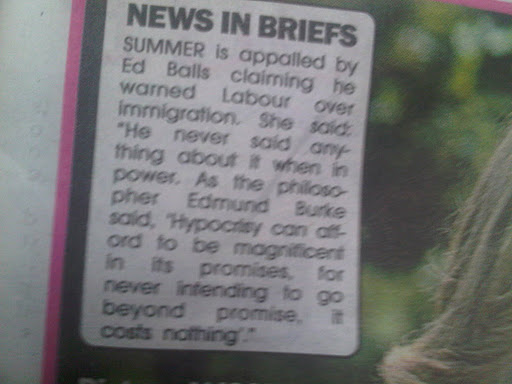
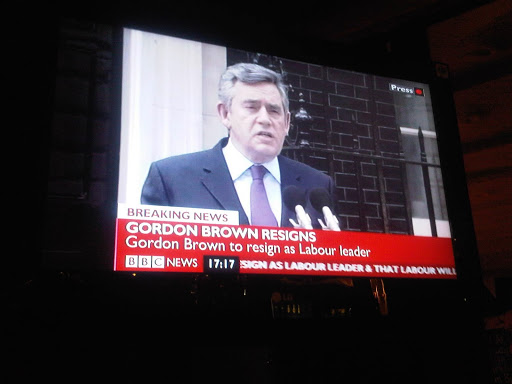
“… And the government that has to make those cuts will make itself unelectable for a generation.” The Coalition.

“… And the government that has to make those cuts will make itself unelectable for a generation.”

Cameron and Clegg would be weeping into their well-tailored suit sleeves at the words of the Panorama reporter, if they weren’t so busy getting off…

Hours and pages of serious coverage, from BBC News 24 to the Economist claim the pair have “got into bed”, after their “civil partnership” in the back garden (tee hee) of Number 10 (nope, can’t make a joke out of that…).

From the media that has grown up alongside the New Labour government that, for all its failings, can be celebrated for legislating to give gay people the right to make a union accepted in the eyes of the law, the crude comparison made when two men stand as a pair, is, actually saddening.

“OOO, it’s like a fake wedding, like one of those fake weddings Elton John got…”

Grow up.

The Independent claims that the “courtship” could have been going on since 2006, the poaching of bright Liberal Democrats to possible Conservative defection.

But this isn’t just a bare-faced switch of allegiance, this wasn’t inevitable, the conclusion needn’t have been foregone.

And unfortunately for those of us who would have preferred a centre-left alliance, the opportunity wasn’t there, Labour weren’t ready.

The government would not have been legitimate if the administration formed was a Lib-Lab coalition.

Although smaller party support was offered by the Scottish National Party, and Plaid Cymru, a “rainbow coalition”, Labour declined, telling maybe of their feeling of guilt?

This too may have created instability, and then what? Another election, with surely a similarly fractured end?

New Labour now need to go away and think about what they’ve done. If it’s our Tory past you’re frightened of, Labour history is more recent.

I will say it and say it again. Two wars, a ‘global financial collapse’ fuelled here by our leader’s belief that he had “ended boom and bust”.

Surely the Venus Fly Trap of a capitalist economy?

Bureaucracy, inequality and greed.

So call it Libcons, Libservatives, or Torycrats if you have to, but two of our political parties have come to a sensible agreement, and I am glad.

With the £163billion deficit and £6bn worth of cuts announced in the Queen’s Speech, nobody can envy the new coalition.

The eyes of the world are on them, or at least we’d like to think they are, and many people are aching for it to fail.

But, scared and scare-mongers amongst us, the Conservatives cannot and will not go off the deep-end. The mines were all closed the first time, for one.

And nobody wants to be hated in the 21st Century, we are Tweeting and Facebook petitioning in the biggest public space there has ever been.

It wouldn’t take a 12-year-old the break during Hollyoaks to super-impose Cameron’s head onto the body of Edward Scissorhands.

So concessions have been made. Some, as a Liberal Democrat member, that I am not happy with.

Will agreeing a referendum on electoral reform produce Nick Clegg’s desired result? The majority of people after all are Labour and Conservative voters, whose parties benefit from the current system.

But if it happens then the kind of coalition like the one being made here would be common-place, which is good.

“What are they doing, compromising and agreeing on things if they’re not from the same party?”
THAT’S THE POINT!!

Some things are just consensus and more heads are often better than few.

And what of opting out of votes on the contentious issues?

Not what Lib Dems wanted, but they didn’t win. We will have to make do.
Academies? Pupil premiums? We shall see… But scrapping wasteful ID cards and rolling back the CCTV state can’t be a bad thing.

But instead of complaining and worrying about cuts, which everyone agreed had to be made, why don’t we, as a nation, get up off our majoratively fat arses and look at what things we could save, because we like or use them, if the government can’t? Leisure services are usually the first to go.

For our hatred of politicians and government, we can’t help but want them to microwave our dinner, put it in front of us and move fork to mouth while massaging our knee.

I hope Ed Miliband gets the Labour leadership. He is a brilliant speaker, and crucially for the necessary severance from New Labour was not an MP when the decision was made to go to war.
And I hope there is a new Left, I’d love to be a part of it.

So Dave, Nick, good luck, fortune favours the brave.

Well Hung- The End.


@font-face { font-family: “Times New Roman”; }p.MsoNormal, li.MsoNormal, div.MsoNormal { margin: 0cm 0cm 0.0001pt; font-size: 12pt; font-family: “Times New Roman”; }a:link, span.MsoHyperlink { color: blue; text-decoration: underline; }a:visited, span.MsoHyperlinkFollowed { color: purple; text-decoration: underline; }table.MsoNormalTable { font-size: 10pt; font-family: “Times New Roman”; }div.Section1 { page: SectionFirst published in Pluto Student Newspaper


This is the last issue of Pluto 2010, it’s been emotional. And with this, comes my final opportunity to grace the pages of your student rag with some acquired opinion.


By the time this column goes to print, we will have seen the last of the first ever leaders’ debates and will be in the final week before the next General Election.


The question you know you should be asking yourself, according to the faces coming through your letterbox and the reporters trying wildly to gauge your opinion, is who will be making the big decisions when you’re… making the big decisions?


Despite prime-time TV banter, minority name-checking and #Iagreewithnick, according to the Poll of Polls Poll (yes, really), on 27th April, no one party has taken a decisive lead.


The Conservatives are coming out on top with 33 per cent of the vote, with the Lib Dems on 30 and Labour flagging on 28.


Although the Conservatives would win the public vote in this scenario, because of the peculiarities, for wont of a better word, of our ancient voting system, Labour would still gain more than 30 more seats (and 176 more than the Lib Dems despite getting two per cent fewer votes).


Because of this, a hung parliament is now 1/2 on bet365.com, if you put £2 on, you would only get £1 back. Plus your stake.


So who or what exactly will be hung?


The Liberal Democrats, assuming they gain the fewest seats of the three would naturally want to support the winning party, but who technically wins in a race like this?


A Lib/Lab coalition is easier to envision ideologically, but will be a union that spells the end of Gordon Brown, as Nick Clegg stipulated in offering his support.


But if Labour don’t win the public vote but still get the most seats overall, big questions should be raised about the fairness of the voting system. Anyone can see that coming second, or, by most polls estimations third, but winning isn’t right. Will this finally be the end of First-Past-The-Post?


While the Lib Dems have always been pro-electoral reform, because it doesn’t weight so heavily the big two, the Conservatives are fiercely against it. They want to win. If they don’t however, they will need others support.


A Lib/Con coalition is less natural, although many councils (Preston city for example) work, somewhat, on a Lib/Con cooperative. Conservatives are Euro and Reform-sceptics, but will concessions be made?


Even as late as 15th April, the day of the first debate, the Conservatives were gaining 40 per cent in some polls, enough to get that much needed majority. Shouldn’t they be doing better?


Reuters also reported, or bragged on Wednesday that ‘Conservatives rake in more election funds than rivals’, £2.2m, compared to just £150,000 for the Lib Dems and there has been Facebook advertising, banners and leaflets coming through your door quicker than they can cut down the trees.


We may yet see a progressive Conservative government take power.

This is a great time of endings and beginnings, at university, where you live, if you’re graduating, where you will work, maybe you’ve fallen in love and you’re thinking about starting and family… Yikes. And in or country as well.


Polls can only give an indication of what will happen on Election Day. The public, given the best information that has ever been available must now spend the next week making up their collective minds.


In the words of the great actor, Errol Flynn I would like to say ‘I’ve had a hell of a lot of fun and I’ve enjoyed every minute of it’.


I imagine Gordon is wishing he could say the same.


The End.

"Money don’t say you love me, cash won’t make me stay"

After her enlightening appearance on children’s Question Time, I found myself drawn again to the wisdom of national treasure Jamelia, this time her turn-of-the-millennium hit “Money”.

Following another week of general election wrangling, with #cashgordon highlighting the flaws of social media, and a fresh round of MP allegations- this time up to 20 members from across the parties taking free jollies in exchange for favours- I found a report in the Guardian confirming, yet again, the age old wisdom that having lots of money doesn’t make people happy.

“More money makes society miserable” they triumphantly shouted.

With all the tweeting and cheating this ‘news’ still doesn’t appear to have reached our pampered public servants.

But all this talk of reddies lead the BBC’s Big Questions panel last week to address an issue that has never really made it to the political agenda, probably because we are a polite breed… and it’s about money.

They asked: should there be a MAXimum wage?

You’ve probably scoffed and thought about stopping reading now you’ve seen this.

But stay with me.

There is a minimum wage, it was only brought in under New Labour, so the debate is not necessarily done.

If we are agreed there is a lower-limit under which a person could not live, then it follows that there could be an upper one?

The economists who conducted the study in the Guardian argue that “once a country reaches a reasonable standard of living there is little further benefit to be had from increasing the wealth of its population. Indeed, it could make people feel worse off.

“As a nation becomes wealthier, consumption shifts increasingly to buying status symbols with no intrinsic value – such as lavish jewellery, designer clothes and luxury cars.”

They warn: “These goods represent a ‘zero-sum game’ for society: they satisfy the owners, making them appear wealthy, but everyone else is left feeling worse off.”

Reminiscent of Alain De Botton’s Status Anxiety, which is portioned up on Google Videos if you’ve got a couple of hours and the basic but not guaranteed ability to stream, this surely makes perfect sense?

People argue that they should be able to work as hard as they want to enjoy the lifeStyle they want.

But it is almost irrefutable fact that after a certain point money can’t make you any happier.

So why bother?

You can have a ridiculous house, cars and holidays, but if you don’t get on with your partner or you’re never at home, no amount of caviar can fill the gap.

Jeremy Bentham, as you may know was one of the founders of utilitarianism, the belief that everything should be done for “the greatest good for the greatest number of people”, the “greatest happiness principle” and, like a lot of 19th century thinking, it still rings true.

Bentham is also associated with the foundation of the University of London, specifically University College London (UCL).

He strongly believed that education should be more widely available, particularly to those who were not wealthy or who did not belong to the established church, both of which were required of students by Oxford and Cambridge.

As UCL was the first English university to admit all, regardless of race, creed or political belief, it was largely consistent with Bentham’s vision.

New Labour have widened participation, and all parties are committed to higher education if all aren’t prepared to show the cards which will set out payment plans.

But it is a shame MPs aren’t taking a leaf out of Jeremy’s, or even Jamelia’s books when it comes to the buying of affections.

Hoon, Hewitt, say this to yourselves next time a shady character slips you a family pass to Euro Disney:

“If you really cared babe

You would spend your time
If you don't understand

You can’t afford mine, no.”

Cost of policy during Tony’s appearance at the Iraq Inquiry? £273,000

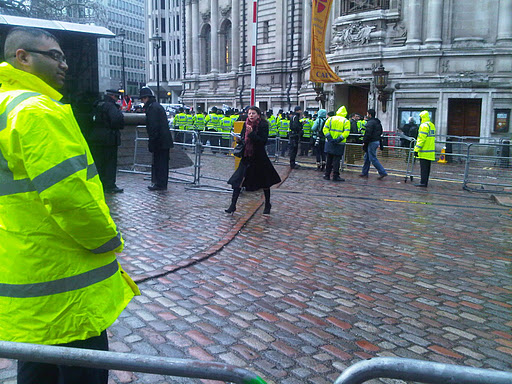
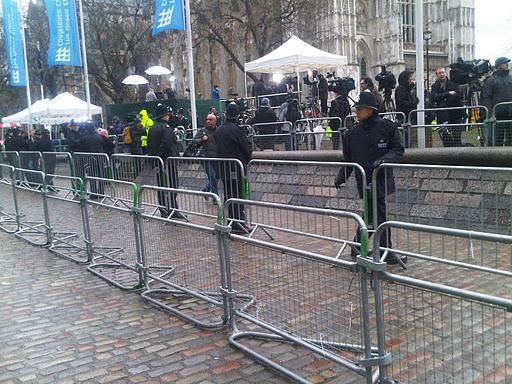
After winning my seat at the Iraq Inquiry, I set off down to London to take my place. And was greeted with scenes of all out police vigilance.

After a kindly police officer calculated the numbers of officers on duty, I set out to find out the cost of such an operation, and was delighted to have my FOI request upheld.

Metropolitan Police Service (MPS)

18 March 2010

Dear Ms Styles

Freedom of Information Request Reference No: 2010020002382

I write in connection with your request for information which was received
by the Metropolitan Police Service (MPS) on 09/02/2010. I note you seek
access to the following information:

* I would like to know how much policing of the Iraq Inquiry has cost,
particularly how much the day Tony Blair attended cost, and how many
police officers were there. I attended on the day and spoke to an
officer who outlined that there were 150 outside alone.

EXTENT OF SEARCHES TO LOCATE INFORMATION

To locate the information relevant to your request searches were
conducted at Finance Services.

RESULT OF SEARCHES

The searches located a number records relevant to your request.

DECISION

After considering whether any qualified exemptions were applicable to
this case, I have today decided to disclose the located information to
you in full.

The cost of policing the Inquiry on days other than when Tony Blair
gave evidence has not been specifically recorded. Any additional cost
to the MPS is minimal because the area around the QE2 Conference
Centre forms part of the normal policing of the “Government Security
Zone” put in place to protect the seat of government.

The estimated total cost of policing Tony Blair’s attendance at the
Chilcot Iraq Inquiry and associated events is **273k.

**178k of this estimate is in relation to opportunity costs. These
costs cannot be regarded as an additional cost to the MPS; rather, the
officers assigned to these duties would otherwise have been assigned
to other policing duties or operations.

**95k is additional costs in respect of overtime (**61k) and non-pay
costs (**34k). Non-pay costs include transport costs, catering costs,
air support costs, the erection of barriers and road signs for public
safety/road closures and the purchasing of specialist equipment.

657 police officer shifts and 28 police staff shifts were worked
during the operation.

The estimated costs highlighted above may change. The actual cost of
policing the event will be included in the annual cost of public order
policing report, which will be published on the MPA website in July
2010.

COMPLAINT RIGHTS

Your attention is drawn to the attached sheet which details your right
of complaint.

Should you have any further enquiries concerning this matter, please
write or contact Becca Oram on telephone number 0207 230 3101 quoting
the reference number above.

Yours sincerely

Becca Oram
Business Management Officer (Information)
Resources Programme Office

Generation why?

First published in Pluto Student Newspaper.

From the top positions in society… right across the board… the highest earners, the ones with money and power, those setting your wages (while cushioning their own), steering your department, leading from the top…

Old, often overweight, unattractive (save silver foxes like Lib Dem Chris Huhne) men.

The average age of an MP is 50, and for most big jobs- think chief exec- you’ve got to have enough “experience” to merit the six-figure salary. Well, you’ve probably got less skills than a GCSE in IT for those trusty powerpoints.

Only 37% of 18 to 24-year-olds voted in 2005, and according to a report from the Electoral Commission last week, more than half of 18 to 24-year-olds are not currently registered to vote.

This will be the first general election I and around 3.5 million other people aged 18-23 will be able to vote in. So, before I sign guys, why should I pick you?

With duck houses, moats and an all-round gloomy financial situation, it is hard to place our trust in such a shady, oft incompetent bunch. Especially when the only thing we have in common with them is that we both wear clothes.

But the Question Time event hosted by the Student Left Network here at UCLan on 5th March was a refreshing change to being dictated to by the dictators.

So, on arguably the issue of the decade for young people, that of tuition fees, what did the three main parties have to say?

Possibly most interesting was the claim made by Mark Jewell from the Liberal Democrats that, if they were to gain power, they would scrap tuition fees within two terms.

Free fees often sounds outmoded, most students accept that they will leave university with a mountain of debt. So is this just an empty policy aimed at setting them apart?

Both Labour and the Conservatives said that this would mean that not everyone who wanted to would go to university, why squash people’s aspirations?

But, Mr Jewell backed up his party’s policy by saying that everyone should have the option, but better provision should be made for people wanting to go into other, wholly worthwhile professions that don’t require university education.

The North West of England makes the highest contribution to the UK’s manufacturing industry. Skilled jobs, but probably not skills best acquired in a classroom.

With less people going to uni, as in the old days of free education, fees could be covered by taxes, and only those who wanted and needed to go should go. Simples?

Mark Hendrick, the incumbent Labour MP spoke of the millions invested in education since New Labour came to power in 1997, aided by a sheet of education facts.

But he was challenged on the Labour party’s “arbitrary” goal of sending 50 per cent of young people to university. On the face of it, yes, you’d expect half of people to do this, but do they really need to? And, as Nerissa Warner-O’Neill for the Conservatives pointed out- what about the 51st person?

She also said the Conservatives would be waiting for the outcome of Labour’s higher education funding review. Which, without representation from the National Union of Students, the biggest union in the country representing young people, the advice is likely to be proceed with caps off.

As someone who has been to two universities, studying two different things, I can only say that first time around, I probably wasn’t prepared for what university would be like. But there wasn’t any talk of compulsory gap year volunteering, an idea that has been touted, but without an ingenious funding model, is unlikely to come from the public pocket, which already has a massive hole in it.

Maybe tuition fees will be your Iraq War. Maybe you’ve got an idea you can pitch to your MP. “Single issues” are the explanation for people not engaging with politics in the traditional party sense.

So not that Labour’s move from socialist to “New Right” and Cameron’s Conservative yet hoodie huggers have anything to do with it? Young people aren’t the only people that don’t vote.

Check out First Time Voters Question Time on the BBC or on IPlayer, hosted by mum and child-friendly Dermot O’Leary. The fact that ‘Adults’ Question Time isn’t speaking to people is a question in itself, and the cool, torn graphics are vaguely insulting to your intelligence.

But, ultimately, you have to do your research, see through the spin and make up your own mind.

"Advice, like youth, probably just wasted on the young"

Written by Mary Schmich, staff writer Chicago Tribune, 1997.

Published in Pluto Student Newspaper.

If I could offer you only one tip for the future, sunscreen would be it. The long-term benefits of sunscreen have been proved by scientists, whereas the rest of my advice has no basis more reliable than my own meandering experience. I will dispense this advice now.

Enjoy the power and beauty of your youth. Oh, never mind. You will not understand the power and beauty of your youth until they’ve faded. But trust me, in 20 years, you’ll look back at photos of yourself and recall in a way you can’t grasp now how much possibility lay before you and how fabulous you really looked. You are not as fat as you imagine.

Don’t worry about the future. Or worry, but know that worrying is as effective as trying to solve an algebra equation by chewing bubble gum. The real troubles in your life are apt to be things that never crossed your worried mind, the kind that blindside you at 4 p.m. on some idle Tuesday.

Do one thing every day that scares you.

Sing.

Don’t be reckless with other people’s hearts. Don’t put up with people who are reckless with yours.

Floss.

Don’t waste your time on jealousy. Sometimes you’re ahead, sometimes you’re behind. The race is long and, in the end, it’s only with yourself.

Remember compliments you receive. Forget the insults. If you succeed in doing this, tell me how.

Keep your old love letters. Throw away your old bank statements.

Stretch.

Don’t feel guilty if you don’t know what you want to do with your life. The most interesting people I know didn’t know at 22 what they wanted to do with their lives. Some of the most interesting 40-year-olds I know still don’t.

Get plenty of calcium. Be kind to your knees. You’ll miss them when they’re gone.

Maybe you’ll marry, maybe you won’t. Maybe you’ll have children, maybe you won’t. Maybe you’ll divorce at 40, maybe you’ll dance the funky chicken on your 75th wedding anniversary. Whatever you do, don’t congratulate yourself too much, or berate yourself either. Your choices are half chance. So are everybody else’s.

Enjoy your body. Use it every way you can. Don’t be afraid of it or of what other people think of it. It’s the greatest instrument you’ll ever own.

Dance, even if you have nowhere to do it but your living room.
Read the directions, even if you don’t follow them.

Do not read beauty magazines. They will only make you feel ugly.

Get to know your parents. You never know when they’ll be gone for good. Be nice to your siblings. They’re your best link to your past and the people most likely to stick with you in the future.

Understand that friends come and go, but with a precious few you should hold on. Work hard to bridge the gaps in geography and lifestyle, because the older you get, the more you need the people who knew you when you were young.

Live in New York City once, but leave before it makes you hard. Live in Northern California once, but leave before it makes you soft. Travel.
Accept certain inalienable truths: Prices will rise. Politicians will philander. You,
too, will get old. And when you do, you’ll fantasize that when you were young, prices were reasonable, politicians were noble and children respected their elders. Respect your elders.

Don’t expect anyone else to support you. Maybe you have a trust fund. Maybe you’ll have a wealthy spouse. But you never know when either one might run out.

Don’t mess too much with your hair or by the time you’re 40 it will look 85.

Be careful whose advice you buy, but be patient with those who supply it. Advice is a form of nostalgia. Dispensing it is a way of fishing the past from the disposal,wiping it off, painting over the ugly parts and recycling it for more than it’s worth.

But trust me on the sunscreen.

The Iraq Inquiry


First published at http://www.pluto-online.com/?p=3446

Alistair Campbell stumbled on his words. For the first time I have ever seen, he has lost his cool. But this wasn’t during the Iraq Inquiry.

Like Fern Britton, the ‘morning political heavyweight’ who tackled Tony Blair a few weeks ago, Andrew Marr sleighed yet another New Labour Dragon on the sofa.

Campbell regained his composure during the Sunday morning roasting, and blamed the persistent line of questioning for his hesitation; the media is out to get him, a claim reiterated on the couch with the Loose Women on Tuesday.

But the real questions, it seems, are being asked outside of the investigation.

I visited the Iraq Inquiry, jovial… rather sadly, that I’d managed to get a ticket to see Tony Blair. Here, after yet another Inquiry, his uppance would come…

Blair was made Middle East Peace Envoy for the UN, the EU, the US and Russia on the day he left office in 2007, (yes, after Afghanistan and Iraq), yet he took the photo-opportunity to condemn Iran throughout his evidence.

He spoke of “security”, “fear”, “risk” and “attack” but just how alarmed should we be? After all, the Iraq War was supposed to make our streets safer?

The BBC reported on the 23rd January that “The UK terror threat level is being raised from “substantial” to “severe”, Home Secretary Alan Johnson has said.”

Almost as unclear as some of Blair’s justification for war; “What if the intelligence was right and we hadn’t acted?”, “If Saddam was getting WMDs, I thought he might attack the UK”, “It wasn’t something that people disputed at the time”.

“The relationship with the US is vital for our security” Blair urged, “I didn’t want America to feel like it was doing it on its own”. Since Barack Obama came to power, he has distanced himself from any “special relationship” with the UK. Probably out of coolness, to shake off the International Lap Dog.

Ultimately Tony Blair’s defence of the ‘intelligence’ on Weapons of Mass Destruction was, “I believed it, beyond doubt”.

From Thatcher to the height of the Blair reign, the position of prime minister has centralized to the point where Blair allowed his own judgment to be the justification. David Cameron is reportedly checking all Tweets made by his shadow ministers in the run-up to the general election.

The lines of question were often probing: “Whose advice were you listening to who didn’t agree with you already?” Chilcot queried. Blair was also lead around a series of “Why Iraq, why now questions”.

But to the dismay of the 700 people who thought they had the golden ticket, they couldn’t get the same answers Fern Britten had pleasantly posed before he appeared.

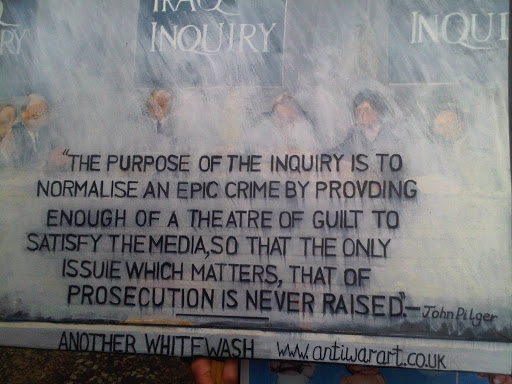
One only need see the sign of a protester outside the building to see what ‘the world’ might now think: “7 million Iraqis killed, injured or made homeless since 2003”.

Associated Press estimated last year that more than 100,000 civilians had been killed, but for every innocent person, there are relatives who have lost a loved one, looking for somebody to blame.

A protester was restrained trying to perform a citizen’s arrest on Blair, influenced by arrestblair.org, a website offering a reward to people “attempting a peaceful citizen’s arrest” on Mr Blair “for crimes against peace”. But he left without detention.

Peter McKay said in the Mail “Perhaps we need an inquiry into inquiries themselves — how they are set up, why some people are chosen for them above others, and the true motives of those who decide to have them.” And, apart from the format being the obvious flaw, I’m afraid he might be right.

The Metropolitan Police declined to comment on how much the policing of Blair’s Second Coming had cost. But a helpful Met Police Officer who had been drafted in for the day said that just outside the building there were more than 150 officers- four higher ranking officer per patrol of 21. You do the maths.

Do we live in a classless society?

First published at http://www.pluto-online.com/?p=3023

WHEN Conservative Ken ‘Big Beast’ Clarke said on Question Time two weeks ago that we, in the UK live in a “classless society”, I nearly choked on my Horlicks (don’t drink the stuff, but I’m building up a picture here…).

Unless he’s talking about the scenes on your local high street on a Saturday night, or the declarations from our greedy investment bankers that they’ll leave if their bonuses are curbed, I’m lost.

“We don’t have the complicated class system of old” he continued. Ahh, so he’s talking about class-class.

One of the first things that came to mind when he said this was the Frost Report sketch with John Cleese, Ronnie Barker and Ronnie Corbett; “I look down on you because I am upper-class,”… “I am working class… and I know my place.”

A comedy sketch, yes, but a pretty accurate picture of British society at that time. There was the aristocracy, the professionals and manual workers. Right or wrong, everybody knew their place.

His remarks were prompted by a speech made by John Denham, the communities secretary and Labour MP for Southampton as Labour try to address the inequalities created largely by themselves over the last 10 years.

In it, he said that: “socio-economic status affects life chances regardless of race or ethnic background, the and the fact that minority ethnic families are twice as likely to be poor is not likely to be a reflection of simply their race.”

The speech is likely to be dismissed as a bid to tempt white voters lured by the British National Party’s nationalistic and simplistic platform, but is actually a huge admission that people’s socio-economic status, their class, is affecting them more than ever.

In 1999 Tony Blair set the Labour Party the task of halving child poverty by 2010, but a report published this week by Save the Children says the number of children living in homes in “severe poverty” in this category rose 260,000 to 1.7m from 2004 to 2008.

Save the Children’s director of UK programmes Fergus Drake said to the BBC: “It’s shocking that at a time when the UK was experiencing unprecedented levels of wealth the number of children living in severe poverty – we’re talking about children going without a winter coat, a bed and other day-to-day essentials – actually increased.”

Therefore, it’s equally worrying that a seasoned politician like Ken Clarke, who is likely to be a member of the next cabinet, is so ignorant to poverty, inequality and the lack of social mobility.

Yes, it may be a classless society if your last name is ‘Big Beast’ Clarke, but most of us don’t have that luxury. Although it isn’t really surprising from a party who, up until David ‘Progressive’ Cameron rocked up, were the party of protecting the elite.

The gap between the rich and poor is still widening, but a lot of politicians are batting for the same team. Poorer people are less likely to vote, because they are less likely to be informed and then have even less of a voice then they already have in society.

‘Demos’ is Greek for people while ‘Kratos’ means power. Power to the people.