
Author Archives: kirstystyles1

A lost generation

@font-face { font-family: “Times New Roman”; }p.MsoNormal, li.MsoNormal, div.MsoNormal { margin: 0cm 0cm 0.0001pt; font-size: 12pt; font-family: “Times New Roman”; }p { margin-right: 0cm; margin-left: 0cm; font-size: 10pt; font-family: Times; }table.MsoNormalTable { font-size: 10pt; font-family: “Times New Roman”; }div.Section1 { page: Section1; }

In a decade New York Magazine has called one for “counter-intuitive thought”, a Yougov poll published yesterday seems to refute perceived wisdom about the younger generation.


The survey of 3,994 16-25-year-olds found – in contrast to the view that young people aren’t “bovvered” – that 64 per cent intended to vote in the next election or when they were eligible, considerably higher than the national turnout in 2005.


Rather than voting on age or personality, 73 per cent planned to vote after considering a political party’s position. International problems were identified as the most important issue by 35 per cent of respondents, while a quarter chose local issues and 22 per cent cited national problems.

Another area investigated was the teaching of politics and current affairs at high school. When asked, 43 per cent of respondents said that teaching of politics and current affairs in their school was inadequate.

The Head of English at a North West secondary school commented: “The overcrowded curriculum and the politician’s current drive for academic success inevitably leaves little room for classroom debate, however important this is for the social functions of future generations.”


Despite huge increases in spending on education, it appears emphasis is placed on the wrong things. Would the reduction of bureaucracy promised if the Conservatives win the next election give teachers back the discretion needed to teach for life, not just for tests?

With BBC3 the most popular publicly-funded channel among young people, should more resources be concentrated on programmes that educate rather than on shows like the purile Dance Like Michael Jackson? Veteran BBC journalist John Humphreys supports the axing of BBC3 because it is not performing the broadcaster’s core functions.

In a bid to make politics and parliament accessible to the young, the Hansard Society lead by John Bercow has launched an outreach programme to schools. Can politicians inspire support in an institution that has lost so much credibility, or is electoral reform, a fairer system, the only way to engage disenchanted and new voters?

Half of those questioned thought more should be taught about personal finance, while 36 per cent wanted more education on the economy. After the worst financial crisis since the 1930s, we should be glad those who will be supporting the “time bomb” of an ageing population want to avert future catastrophes.

The UK is just seven per cent short of New Labour’s target of 50 per cent of young people attending university, but with unemployment of 16-25-year-olds at nearly 1million, the messages are increasingly confusing.

Although this is a year where professions from social work to sports have been embroiled in scandal, the young still need guidance to help them to become responsible, hardworking citizens.


There is certainly the desire for it, but will someone put their head above the parapet – policy makers, broadcasters or teachers – before today’s young people become the “lost generation” of a decade the United States are calling the “Oughties”- we oughta have seen this coming?
Words are the only things that last forever- visiting the Iraq Inquiry

@font-face { font-family: “Times New Roman”; }p.MsoNormal, li.MsoNormal, div.MsoNormal { margin: 0cm 0cm 0.0001pt; font-size: 12pt; font-family: “Times New Roman”; }table.MsoNormalTable { font-size: 10pt; font-family: “Times New Roman”; }div.Section1 { page: Section1; }

First published in Pluto Student Newspaper.
The Iraq Inquiry started last week and after serious deliberation over the previous months Gordon Brown said it will be held in public. So we undertook our public duty to attend the hearing on Monday.

Unlike the Hutton Inquiry into the death of Dr David Kelly, the Iraq Inquiry “is not a court of law. The members of the Committee are not judges, and nobody is on trial.”

Members of the audience were sceptical about this remit.

If evidence is deemed to be a threat to national security, the cloak can be cast back over
proceedings. It will be interesting to see what happens when Blair makes his appearance early next year.
There were no lawyers present, which meant Sir David Manning, former foreign policy adviser to the Prime Minister, spoke at length.

His evidence highlighted the New Labour dependence on unelected advisers. While Condaleeza Rice, then US Secretary of State’s name frequently came up, the UK foreign secretary did not.

Robin Cook had been the Foreign Secretary until he was moved in the 2001 general election.
And the new appointment, Jack Straw was, by Manning’s account, nowhere to be found.

He emphasised that when Bush and Blair met, they did not just talk about Iraq. Which again makes you wonder why the PM was taking such a front seat in someone else’s portfolio.

Largely reading from a document he’d brought in with him, it was almost like he was trying to bury the important things. Or bore everybody so they didn’t come back for the second half.

The man leading the Inquiry, Sir John Chilcot was Staff Counsellor to the Security and Intelligence Agencies from 1999 to 2004 and the National Criminal Intelligence Service from 2002 to 2006. Both are government intelligence agencies.

Michael Crick, Political Editor of BBC’s Newsnight commented on the appointment of war historian Sir Lawrence Freedman to the inquiry in his blog on the 15th June: “Critics of the war might argue Sir Lawrence was himself one of the causes of the war!

“The professor once told me how, back in 1999, he was contacted by Downing Street seeking his thoughts for a speech on humanitarian intervention which the-then Prime Minister Tony Blair was about to make in Chicago.

“When was military action justified for, liberal, humanitarian reasons?

“Sir Lawrence says he was astonished when he heard and read Mr Blair’s famous Chicago speech- perhaps the most important of Blair’s premiership – that it was based largely on the memo he had sent to Number 10.

“And the rest was history.”

He went on to question the appointment of another historian, Sir Martin Gilbert: “In 2004, he went so far as to compare US President George W Bush and Mr Blair to Roosevelt and Churchill.

It was also Sir Winston Churchill’s birthday on Monday 30th of November so we took a trip to the cabinet war rooms hidden beneath the ground near 10 Downing Street.

Churchill is known as a great wartime leader, but less is known is the writing he did throughout his life.
Having been to the Inquiry, and thinking what could and should come out of it I pondered
Churchill: “Words are the only thing that last forever.”

In a world of deeply woven webs, with many powerful and self-interested parties, one can’t help but think that often words mean nothing at all.

This is England


@font-face { font-family: “Times New Roman”; }@font-face { font-family: “Calibri”; }p.MsoNormal, li.MsoNormal, div.MsoNormal { margin: 0cm 0cm 10pt; line-height: 115%; font-size: 11pt; font-family: Calibri; }table.MsoNormalTable { font-size: 10pt; font-family: “Times New Roman”; }div.Section1 { page: Section1; }

First published in Pluto Student Newspaper.


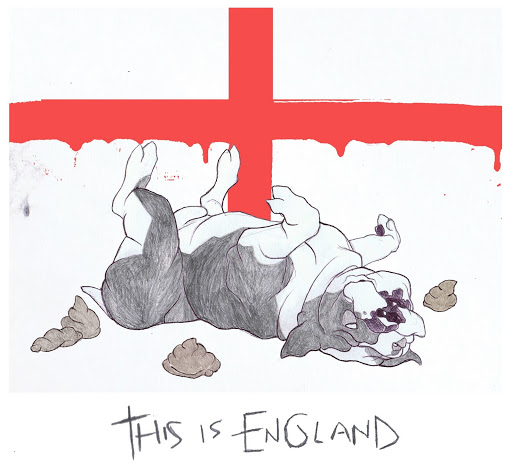
After a student was photographed urinating on a war memorial in Sheffield a few weeks ago, you could have expected us all take something from it and buck our ideas up. We aren’t animals, we’re academics.

But apparently the message didn’t get out to two UCLan students who went out on Halloween dressed as Madalaine McCann, and Adolf Hitler. Not respectively.

But who’d have expected any more as, the weekend after, on Remembrance weekend no less, we are met with the headline, as picked up by the Huffington Post in the United States “Miss England loses crown after bar brawl”.

Yes, the lovely Rachel Cristie, niece of Olympic athlete Linford, is the alleged instigator in a bust-up with Miss Manchester, Sara Beverly, over the Sky One Gladiator Tornado. The fairest maiden in all of England scrapping in a pub. Classy.

And not for the boys to be outdone, on Sunday it emerged that ‘Grandpa England’ (my words- I’m running with a theme here), the father of England Captain John Terry was filmed by News of the World journalists dealing cocaine. Ted Terry, who has been given a house, mortgage free, by his talented son resorts to crime to fund his jobless ‘luxury’ lifestyle. Great.

It is 2009. The ‘word’ on everyone’s lips, tweets and Facebook statuses is ‘Jedward’. Two largely talentless twins making fools of themselves on national television. These are our role models.

Yes my friends, apparently this is England.

In a world with few boundaries where everyone can see everything I often fall back on the idea: “what would my parents think?”

If that fails, maybe your parents are of a different school of thought, then ask, what would Facebook think? People who weren’t there when you came up with your hilarious idea, people who might be affected by what you are going to make a mockery of, what would your future employers think?

It might be sad, but it’s certainly true: we live in a digital world where potentially everyone can see everything. Huffington Post readers from across the Atlantic believe that someone who ‘we’ have ‘crowned’ Miss England decks people of a weekend. For all many Americans know, she could be married to Prince Charles.

Our own university is launching a P.R drive to raise its profile in a world where appearances are everything. Maybe we too should increasingly be thinking in the same way.

University is only a learning gap preparing us hopefully for bigger and better things. We will all have to sell ourselves in an ever-increasing crowd at the end of it. Who wants to end up Joe Bloggs 2:2 in English Literature, North Tower of the World Trade Centre- Halloween 2001, currently till trainer in a local convenience store?

Fortunately for Ms Christie, although she has given up her highly esteemed post after careful consideration, she now has her career as a potential Olympic heptathlete to concentrate on.

For some people there may not be repercussions, but for many people, there are. Think- what would your parents think?

Image commissioned exclusively for Pluto- By Imogen Wood.

Gordon who indeed…

First published at http://www.pluto-online.com/?p=2481

So, Gordon Brown came up North for a painfully stage-managed forum with a choice group of people, where questions were vetted and there was no room for debate.

And what did we take away from it?

Almost nothing.

A token gesture, from, to quote the questionable Conservative MEP Daniel Hannan, “the devalued Prime Minister of a devalued Government”.

When pressed on the issue of ‘frontloading’ by Parviz Shasva, owner of Rooms Nightclub, the PM suggested, “we could ask for an agreement among the retail trade and talk to Tesco and so on but then a number of shops may keep outside of that.”

“Could?”, “Ask?”.

Forgive me, Gordon, I’m a bit confused here. Aren’t you the most powerful person in the country? The leader of the country? And then clearly the best placed person to tell companies to change their practices if it is in the best interests of the people who you represent?

From Margaret Thatcher to date, power has become increasingly centralized in the hands of one person, the prime minister. And yet, his answers are feeble. He sounds powerless.

Unfortunately, I’m not surprised. The Guardian reported last week (22nd October) that Lord Myners, the City Minister “insisted… that the government could not use its stakes in the bailed out banks, RBS and Lloyds Banking Group… to stop bonus payouts.”

£1.3trillion of taxpayers money has been pumped in to banks to keep the sector a float, and yet, it appears that our elected representatives cannot stop a practice that has rightly infuriated the public.

Lord Myners urged the banking sector to address the bonus issue itself in a bid to not “bash the bankers”. Ask them nicely not to give themselves lots of money?

One can’t help but compare this with MP’s ability, or not, to self-regulate. Richard Garside, a local estate agent asked of Jacqui Smith’s regretful plea in the House of Commons following her home ‘flipping’ that gained her more than £100,000, “can any employee caught stealing from his employer expect that an apology will suffice?” For the average employee, the answer is no.

So, do you get a bonus if you look after people as a nurse, and reach all the targets? Do you get a little extra if you get all the kids you teach through all the ludicrous testing forced upon you by central government as a teacher? No, you don’t. You are just doing your job.

So why then, when these people are just doing their job, and even when they aren’t, are they allowed to take home thousands of pounds in their already unfairly large pay packets?
Are some people above recrimination?

Lord Myners is addressing high street banks that have taken government money. Not even the investement banks that got us into this trouble in the first place.

The Shadow Chancellor George Osborne has come out with some headline catching rhetoric, but with little believable policy. He actually plans to cut cash bonuses while still giving rewards in shares. One can only look on in disbelief.

Maybe Mr Brown would have felt better with an easy question at the forum, like “what is your favourite biscuit”, a question posed to him at an audience with mumsnet. An easy question, that took him two days to answer.

Incidentally, it’s a choc-chip.

Wikilegislature

First published in Pluto Student Newspaper.

The Conservative Conference has come up with some corkers this year.

From Chris Grayling labeling Labour’s appointment of General Dannatt a gimmick, only to find it was his own party doing the hiring; to Cameron’s multi-millionaire wife wearing ‘cheap’ shoes from Zara (she obviously hasn’t been to Primark), balancing out her vast designer wardrobe.

But aside from the gaffes, some policy proposed at the conference that could have huge consequences for democracy has largely slipped under the radar.

On Monday, William Hague announced a transformation to the way laws could be made if the Conservatives form the next government; voters will be given the power to alter bills that are going through Parliament. ‘Yeah, right’, ‘how?’ and ‘why’ you might ask.

But the idea was first championed by the President-of-New-Technology himself, Barack Obama, with a site called mixedink.com. So we shouldn’t shelve it right away just because it’s the Tories.

The website is supposed to allow voters to comment on and rewrite the broad principles of a bill, and individual clauses. Contributors would also rank comments so the most popular suggestions appear at the top.

The Internet is the most democratic platform we the people have ever had at our fingertips. And Wikipedia is the largest user-generated, collaboration the world has ever seen. It has over 3 million articles in the English version alone but has only been going since 2001.

I can almost envision a ‘Wikilegislature’.

But, despite the all-seeing-eyes of Wikipedia, its trusty cleaners and its charitable status, even it is open to ‘vandalism’; ‘silly vandalism’ and ‘sneaky vandalism’ to name but just two types of sabotage they see every day.

So even though the Internet opens up the discussion to those who want to contribute, so too does it open it up to anti-social people, who for reason or no reason want to slow everybody down.

In a country where the government has a crisis of legitimacy, where more people do not vote than vote for the winning party, this could give people a more tangible link with their legislature. Or, like the political process itself, people could still not participate.

Why wade through all the legalese and boring by-laws when you could be watching a weird American kid called Tay Londay sing a weird song called ‘Chocolate Rain’ in a weird voice?

Forty-two million of you already have.

Or the idea could just as easily end up in the spin-bin.

Speaking of spin, who’d have though the Conservatives could get Bono, “live from a satellite orbiting his own ego” (Russell Brand), beamed into their conference to introduce the main act?

Well, probably the Labour Party, who the Guardian alleges also had Bono featured in a video as part of their Brighton conference a week earlier.

We trust all the proceeds are going to charity.


Jordan the next PM?

First published at http://www.pluto-online.com/?p=2148


WELCOME, and welcome back from your barbecue summer. Pack your bikinis away, say goodbye to the sun, and sense the sarcasm.

No matter how much sun there was in June, we will only remember having to ditch our umbrellas after wind meeting rain, culminating in us looking stupid and getting soaked anyway.

In fact, July has been provisionally touted as the ‘wettest on record’.

You’d be forgiven for thinking that the Met Office was in the business of weather prediction, but alas, at this stage long-term prediction is just hopeful guessing.

If they’d have guessed correctly, weathermen might have become the new slebs, rolling out of nightclubs. You’d never have to take a coat ‘just in case’ with your new bwf (best weather friend). But as it stands, they are now about as trusted as bankers, politicians and journalists.

Big Brother has been axed, although there will be one more series. The ‘great social experiment’ of the 21st century has ended up a refuge for the mad and fame-hungry.

And the golden couple, the ‘British Brad and Jen’, Peter Andre and Katie “don’t call me Jordon” Price have called time on their marriage. But don’t worry if you still need your fix, Ms. Price’s next tell-all show, ‘What Katie did next’, has been almost uncomfortably quick out of the pipeline. I’m getting a little weary.

According to recent news you Freshers are the brightest and best bunch yet to take your places at university. Congratulations, and welcome again.

Unfortunately a recent report from the Organisation for Economic Cooperation and Development would have us believe you are all staggering half-cut to your desks with your illegitimate children in tow. Yes, you are the smartest stupidest group we’ve had yet.

A 97.5 per cent pass-rate, the 27th year on year increase has left everyone pointing the finger. The Government are hailing it as another success but even exam boards are admitting it’s a little bit unbelievable. The same happened last year and Labour made a botch-job of fixing it by introducing the… what was it that week… the Diploma. Is anyone elsebored of this?

According to Facebook, it seems you are. More than one million of you have joined the ‘I Hate being bored’ Facebook group, where you can trade your friends (who needs ‘em) gather balls if you’re lacking, or collect coins, although unfortunately they aren’t legal tender. All of which we are promised are ‘very addicting’.

Great games? Bad English.

For those of you looking for a new daily dose of drama, then the upcoming General Election might have the excitement you’re after.

Thanks to Lee Bradshaw, outgoing Campaigns Officer on the Student Affairs Committee, all Freshers moving into university accommodation this year will be entered on to the electoral roll. So no excuses! All you need to do now is pick a side.

The Conservatives have been touted to win, but, as New Labour struggled with its promise of ‘radical centre’ politics so too might Cameron’s cohort be dogged by their oxymoronof-a-slogan, to be ‘progressive Conservatives’.

Labour would need drastic action to win back public opinion, which could come in the form of a leadership challenge, most likely from Alan Johnson. But after 12 years of policy catastrophes, in everything from foreign affairs to economics, the lectorate have probably had enough.

Labour might even be so dramatically defeated that we could see the Liberal Democrats taking the opposition for the first time in their 21 years. The Lib Dems have seen their profile increase as Vince Cable has been spot-on on our troubled economy, but would they go into an election looking to win?

There are various fringe parties, from the Pirate Party, to the internet-selected Jury Party; the trusty Greens and Socialist Workers and even the British National Party and its dubious copy-cats springing up across the land.

Confusing, possibly. But do not fret. Pluto will be on-hand in the coming months to make sense of it all for you. But if what Katie is thinking of a career move into politics, my decision will be a little more easily made.

Picture commissioned exclusively for Pluto- by Ben Hill.

What do LibDems talk about? Mark Jewell, guest column

@font-face { font-family: “Times New Roman”; }@font-face { font-family: “Arial”; }@font-face { font-family: “Arial Black”; }p.MsoNormal, li.MsoNormal, div.MsoNormal { margin: 0cm 0cm 0.0001pt; font-size: 12pt; font-family: “Times New Roman”; }table.MsoNormalTable { font-size: 10pt; font-family: “Times New Roman”; }div.Section1 { page: Section1; 

Friday 18th September and I set off for the Liberal Democrat Conference in Bournemouth. The sun is shinning, but the clouds of recession, high debt and unemployment set the scene for the last big autumn conference before the General Election.

The first thing I heard on the news on the first day of conference was Nick Clegg’s “savage cuts” call. Such language was itself a bit savage for Lib Dems. But behind it was the stark reality of needing to fix the great black hole in the public finances, whilst only making firm commitments we can afford.

I was born and brought up in the east end of London and went to the local Comprehensive school. As the one and only of my family to go on into tertiary education, I went to Thames Polytechnic to get a BSc (Hons) Mechanical Engineering, I have felt that opportunity has favoured me.

It was not until the turn of a new millennium that I became active in politics; I felt strongly about the introduction of tuition fees and a war in Iraq based on a wholly false premise.

It was thus with some angst that I went to conference knowing that there were murmurings that we could not afford to scrap tuition fees.

Nonetheless, our draft manifesto A fresh start for Britain includes a pledge to scrap tuition fees. The issue is not will we, but when. What is clear is that unlike Labour we are not planning to charge students up to £7,000 per year for university tuition alone. Unlike the Conservative, we are not planning a massive hike in the interest you pay on your student loan.

For me the issue is one of harnessing the full potential of all sections of our society so that we can compete in a world market and build a more robust, fairer society.

Nonetheless, If you’re poor, you’re still far less likely to go to university than if you’re better off. If you’re from an ethnic minority, you’re more likely to be stopped by the police, even when you haven’t done anything wrong. If you’re a women, you’ll probably be paid less than the men you know.

If we are to build a fairer society, then we must do things differently. If we end the Child trust fund, we can pay for smaller class sizes for five, six and seven years olds. We can save billions by reducing the bureaucracy of Labour’s centralised state, scrapping ID and other databases and by saying no to the like for like replacement of Trident. . Only if we can save enough , will we still be able to include in our manifesto some of the pledges for new investment that we hold dear.

m/f

We must be ‘savage’ and bold in resetting our priorities from excessive bureaucracy and waste to building our infrastructure.

No doubt the debate will go on, but The Liberal Democrats are a democratic party where the members will decide policy, unlike other parties, where policy is at the dictate of the leader.

Reflecting on the weeks events, on my journey home, I can picture a better future for Britain. Now I want to make it happen.

Mark Jewell is the Liberal Democrat Parliamentary candidate for Preston.

Gordon the Gopher

@font-face { font-family: “Times New Roman”; }@font-face { font-family: “Calibri”; }p.MsoNormal, li.MsoNormal, div.MsoNormal { margin: 0cm 0cm 10pt; line-height: 115%; font-size: 11pt; font-family: Calibri; }table.MsoNormalTable { font-size: 10pt; font-family: “Times New Roman”; }div.Section1 { page: Section1; }

First published in Pluto Student Newspaper.

The Labour Party Conference began on Sunday, and with that, you rightly expect some Labour Party Bashing. But I would actually, first like to congratulate Gordon Brown.

Following talks at the G20 in Pittsburgh last week, he has made it part of his party’s promise to use new laws and unprecedented ministerial pressure to come down hard on banks that still give out big bonuses.

He will also give regulators powers to force banks to build up their cash reserves, rather than paying out massive cash rewards.

But, Gordon, I ask. WHY NOW???

It is almost a year since bankers hit the headlines, when Fred The Shred made his fall from grace and swift disappearance from the media’s watchful gaze ( apparently a genuine photograph of Sir Fred will fetch you a cool thirty grand. But the holiday to whichever exclusive island he, Tupak and Elvis are cohabiting… is priceless).

People were outraged. Bankers were hung. Windows were smashed. And where was he?

So now, after having time to think about it, as our PM is famed for doing a lot of, he has come up with policy that the man in the street could have told him, after falling out of Wetherspoons, with his opinion informed only by The Sun.

The conference hall at Brighton was reportedly deserted as even loyal Labour supporters showed he couldn’t tell them anything they hadn’t already raged about after reading it in the Mail. Damage done.

The hall was however, packed for the real star of the show, back (for the third time in the Cabinet) by popular demand (from some factions), unelected and unafraid, Lord Mandleson of Everything. Tony Blair once said that the Labour Party would only change when it “learned to love Peter Mandleson”. If that is what has happened, it is only because they can’t stand Gordon the Gopher any longer.

Labour has pitched itself on the side of the middle classes at the conference. As opposed to Cameron’s Crew who have only committed to tax cuts on inheritance. Because they know which side of the fancy cracker their caviar is on…

But middle-class unemployment has trebled since the recession began, hitting everyone from six-figure-salaried-executives to the 300,000 young people who graduated in 2009 into the ever shrinking professional jobs market.

And Labour’s response has been too little, too late. The Job Search Support Scheme for Newly Unemployed Professionals has been given just £3million, compared to the£5billion floating around in Job Centre Plus. And as middle-class workers opt for lower-paid jobs, there are fewer jobs for people down the chain.

From bankers, to Gurkhas, to the recession, it’s like Gordon has been shut in a bunker only to emerge with policy after after policy after everyone has already gone home. And for this, it seems Labour might be finished.

Switch off the lights in the conference hall on your way out will you Gordo?

G20 protest- Gee, what a showing, but will they take notice?

First published at http://www.pluto-online.com/?p=1765

What a decade! As New Labour staggers to its timely death, this could be the most telling week we, the people, have had since the demonstrations against the Iraq War. Hopefully this one will actually make a difference.

The emergency G20 summit is due to open today- yes, April Fool’s Day could not have been any more fitting- and people are pissed off!


Activists and even usual apathetics are coming together, putting their differences aside and sticking it straight to the man in what the Guardian termed a ‘rainbow alliance’.


Whether they’re campaigning against globalization, capitalism, or war, for measures to combat climate change or for justice, a band of somewhat unlikely bed fellows has taken shape.


Everyone from trade unions, student groups like People and Planet, our old friends the CND (campaign for nuclear disarmament) and so-called ‘radical academics’ are taking to the streets.


So apt that the summit, and therefore the protests, are taking place in London where we have seen the mighty, gluttonous financial system’s vital organs burst.


Workers in the capital, including those at MTV were told to “dress down” so they would not be mistaken for disbanded City workers and targeted by the angry mob. The Met said before Saturday, the first day of demonstrations, that they expected it to be ‘very violent’ but goaded that they were ‘up for it, and up to it’.


Would these threats encourage violence so the protesters would undermine their cause? Or were they a warning made to discourage peaceful campaigners from joining the national picket line? Either way, the threat didn’t work and the violence didn’t materialize.


Because we aren’t the criminals here.


People’s disdain for the once lauded bankers manifested itself in an attack on Sir (I use the term very loosely) Fred Goodwin’s swanky villa. Criminality isn’t the answer of course. But the government should be asking itself why people feel they have to resort to such tactics in what should be a representative democracy.


Responsibility was taken by the group ‘Bank bosses are criminals‘ and whilst police action hasn’t been taken against any bankers in this country, they are said to be pursuing the perpetrators of what is probably best described as a petty crime.


UKFI, the body created to handle the government’s stakes in nationalised banks, is ‘considering’ using its (our) 70% stake to vote against a motion justifying Fred the Shreds hefty pension package. Finally! Why are they not getting the picture?


A video emerged last week of Tory MEP (why did he have to be a Tory?) Daniel Hannan giving Gordon Brown a royal roasting. The camera flicked to a typically defiant Brown who appeared to snigger and then continue with his game of noughts and crosses.


But many of you will still be asking, of all the different avenues of showing our disgust is anyone really going to take any notice?


After all, until now, and even now, there appears to be an unspoken conspiracy.

Everyone knows that quantative easing, printing money, won’t really work. It will devalue our currency. Everyone knows that some, many, maybe even all of our politicians, across party lines, have been taking advantage of an imperfect system that could not prepare itself for crafty lawyers and their legal loopholes.


So maybe that’s why no one can wear the white suite of Martin Bell and come out against corruption. The government, the business leaders and the media.


But Barack Obama is a fresh face at the conference. Could the public outrage and peaceful protest, coupled with this brilliant man, be the key to a future full of truthful politicians, free from greed in a world with a clear view to tackling climate change, poverty and war?


Is this too much to ask? As always in the politics of the day, only time can tell.


Anyway, the next important date for your diary? If a vote of no confidence isn’t taken against Brown any sooner, it will be the next General Election in May 2010. Ten years into the millennium that promised so much.


Here, again, the people will have their say, and as Mr Hannan finished on last week, the voters: “can see what the markets have already seen; that you are the devalued Prime Minister of a devalued Government.”

Students as consumers- the great university debate

First published at http://www.pluto-online.com/?p=1768

The debate is rumbling on about where we go on funding for university.

The NUS has been protesting in London against removing the cap on top-up fees. But what is really at issue here?

In these hard economic times, we need, and need to be world-class graduates that can compete in the global markets and excel in our given fields.

China, India, Brazil and Russia, the growing economies, have seen their chance to shine here, and are understandably grasping it with both hands.

A lecturer comments on an article on the Independent Online that many UK students (I’d have preferred it if he’d made it clear that it wasn’t all) are wasting their degrees:

“Because they are constantly told that they are ‘customers’, students increasingly assume that getting a degree is simply about being spoon-fed, and taught to the test, in return for paying their 3,000.

“There is alarmingly little appreciation that learning/studying is an interactive, two-way process.

“The same mindset also means that a growing number of students are choosing whether or not to turn up for (compulsory) classes, on the grounds that ‘If I don’t attend lectures or seminars, it’s my money I’m wasting, so why should you care? Besides, you can’t afford to kick me off the course, because you need my fees!’”

He continued: “Many students today have an alarming inability or unwillingness to think independently or engage intellectually. They expect everything to be done for them (consumer ‘rights’, naturally), and many of them seem far more interested in spending their days and nights text-messaging or playing on their Facebook sites than reading books.”

Can you say it doesn’t sound a little familiar? We’re a pretty despondent group by all accounts. Many are scraping through, blowing their loans and not ending up in a career worth the money.

However they decide to solve the funding issue- they might consider removing the cap and allow better universities to charge more, a progressive tax or a sort of tax after education- are universities producing the high-quality graduates necessary for the future, to improve on a knowledge-based economy?

In January this year, the BBC wrote that intake to UK universities is at “an all-time high. It [the government] wants more than half of young people to go on to higher education.

However, they went on to say that: “The number of UK students at UK universities fell from 1.97 million in 2007 to 1.96 million last year.” The drop is more than likely a funding issue than a realization that university might be a waste of time. Plus, what are the other options?

Oxbridge and the Russell Group universities still out-perform, as always. And these graduates are apparently getting twice as much contact time for their money. But would allowing these institutions to charge more yet again price some out of education?

Universities are depending upon international students for their income, some charging almost seven times what the natives are asked for, is this really fair? And it seems part-time students are getting a raw deal. But is doing a degree on that basis more or less useful? It is obviously necessary for some learners but is six years too long to get something that might ultimately not bag you your ideal career?

Current undergrads have been perpetual guinea pigs of New Labour. Third years will have been half way through primary school when Tony and his cronies got their optimistic but misguided mitts on our futures. Coming to the end of its natural life, we might have been able to breathe a sigh of relief- the end of meddling and patching-up. But no, the mess could take years to clear up. Because what is the answer?

And what of the tutor’s comments? Is many student’s treatment of their degrees another example of ‘rights without responsibility’? Everyone has the right to go, but what responsibility comes with it?

University was at one time only for the privileged, why are we all not more grateful of the privilege we have been given?